
Repair shop at the end of the universe
14 September 2026
Samprati Pani
A long-time resident of a neighbourhood might suggest one to you. And when you set out looking for it, a chaiwala or a sabziwala or a kirana dukandar1 might be able to provide precisely vague or vaguely precise directions to reach it. ‘Take a left from the from the main intersection of the market…’ Which side of the intersection? ‘The side with the juice shop on your left. Then walk straight till you cross the second or third alley crisscrossing the lane.’ Second or third? ‘The second main one, that is, if you don’t count the narrow one, and then turn right from the samosa shop. Does the samosa shop have a name? ‘Maybe it does, maybe it doesn’t…you will see it for sure, there’ll be a swarm of people around it. Walk a few steps ahead…’ What do you mean a few steps…how much further is it from there? ‘Oho! Just walk two steps and it’ll be right there on your left.’
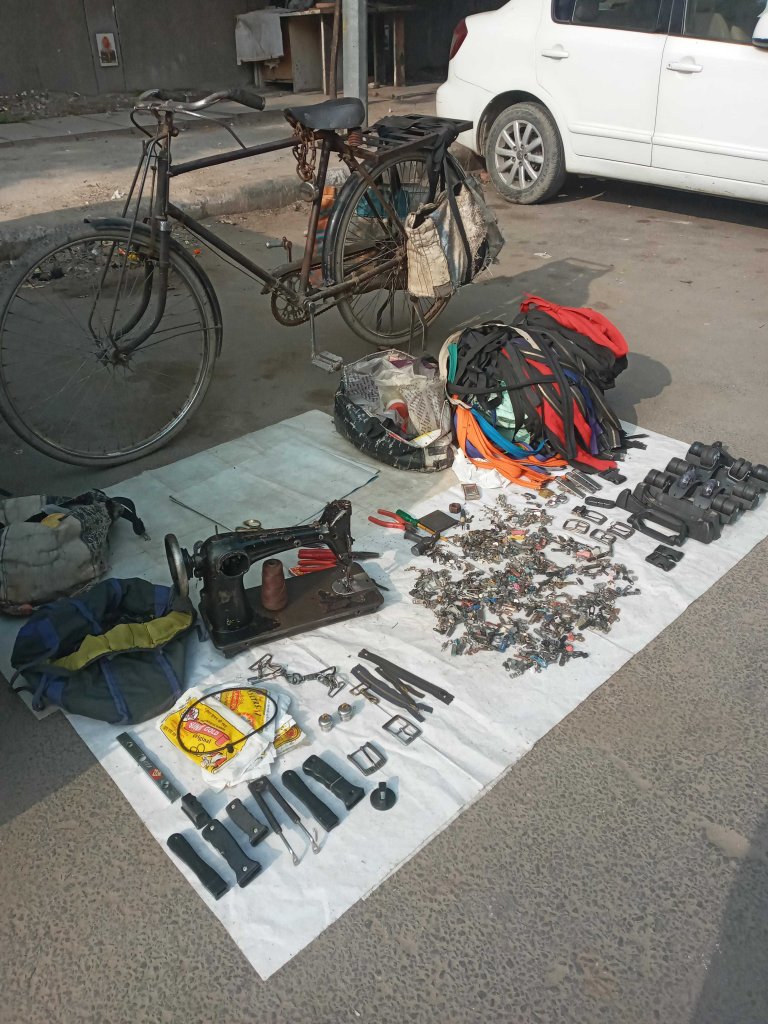
You try to remember and follow the directions, stopping every now and then to ask a street vendor, a shopper, or a passerby to guide you. You think you have reached the whereabouts of the location but can’t locate the shop; you ask someone yet again and the shop is pointed to you. It was right next to you but not easily discernable in the midst of the tightly packed shops, stalls, and pushcarts sitting cheek by jowl along the lanes and by-lanes of the neighbourhood market. When you pause and look, you notice a dilapidated kiosk cobbled together with salvaged plywood, the remains of an erstwhile paan–bidi shop, and parts of what might have once been a study table. Arranged on and around this stall is an array of objects: pans, toasters, mixies, electric kettles, ironing machines, an assortment of tools, nuts and screws, bundles of wires. It is this jumble of objects that serves as an index for the nature of the shop: a repair shop.
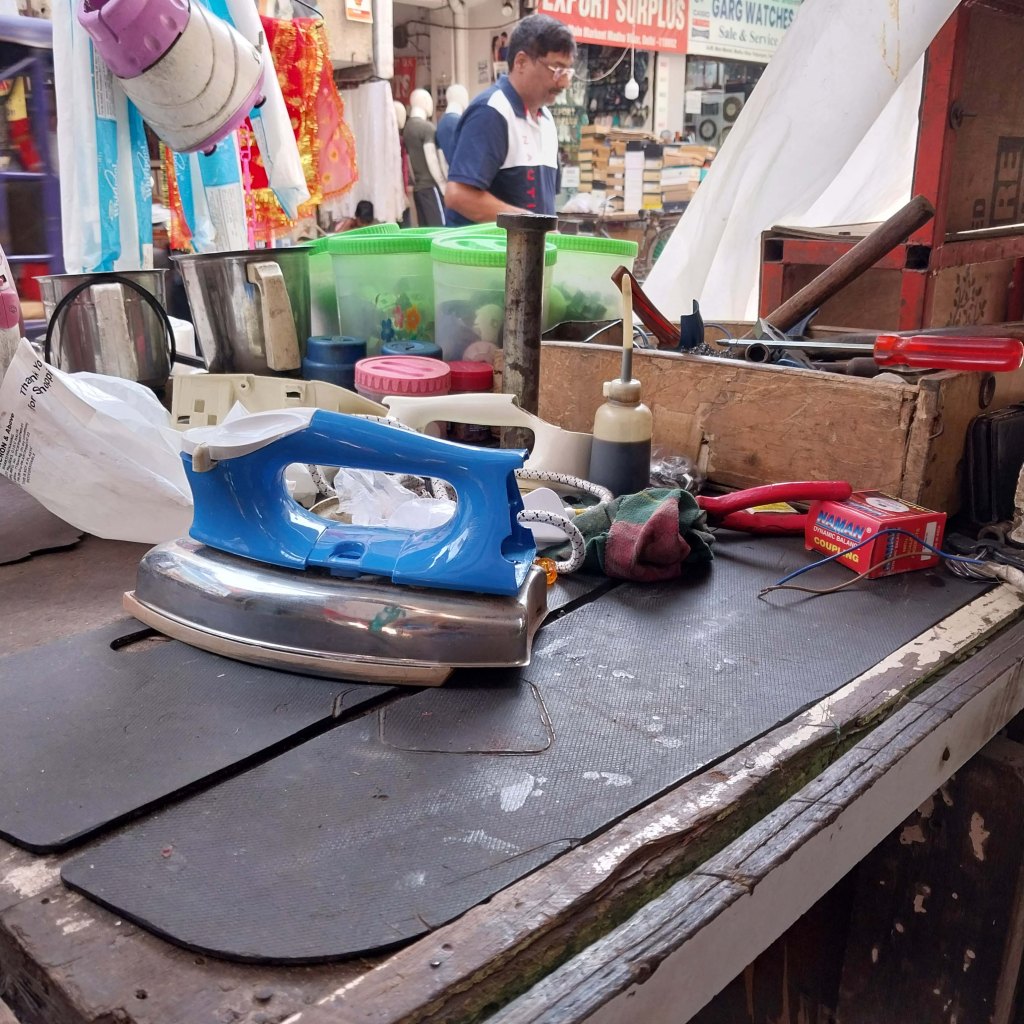
Theek karna and marammat are terms commonly used in Delhi for mending and fixing, though ‘repair’ and ‘repairing’ are also very much a part of colloquial use, particularly in the context of shops that provide these services. The term ‘repair’—to mend, to fix, to restore, to order, to make whole again—comes from the Latin reparare, re- meaning ‘again’, and ‘parare’ meaning ‘make ready, prepare’. The term encapsulates within its fold all forms of remaking and redoing—preparing again—that maintain everyday lives. Municipal sweepers and garbage collectors repair the street by cleaning and clearing it daily for its continued use. The presswala2 repairs creases by ironing clothes so they can be worn again. The unceasing cleaning and provisioning work that women perform in homes prepares, again and again, the everyday life of the household. These examples typically come under the rubric of ‘maintenance’. Maintenance, except for certain forms located in formal, large-scale industrial or infrastructural settings, tends to be low-paid or unpaid, is often undertaken by ‘lower’ castes and women, and elicits little attention or social value. It is only when everyday maintenance is not carried out for a period of time, e.g., when a wife is visiting her natal home or when municipal workers are on strike, that the absence of the continuous ‘making ready’ becomes seen, expressed in terms such as ghar bikhar jaana (lit., house falling apart) or the street being in disrepair.
Repair, thus, is not only everything that fixes the visibly broken but also everything that cares and maintains so things don’t fall apart. It is everywhere, yet often not detectable because things appear the same and the process of labour involved in maintaining this appearance is easily glossed over.
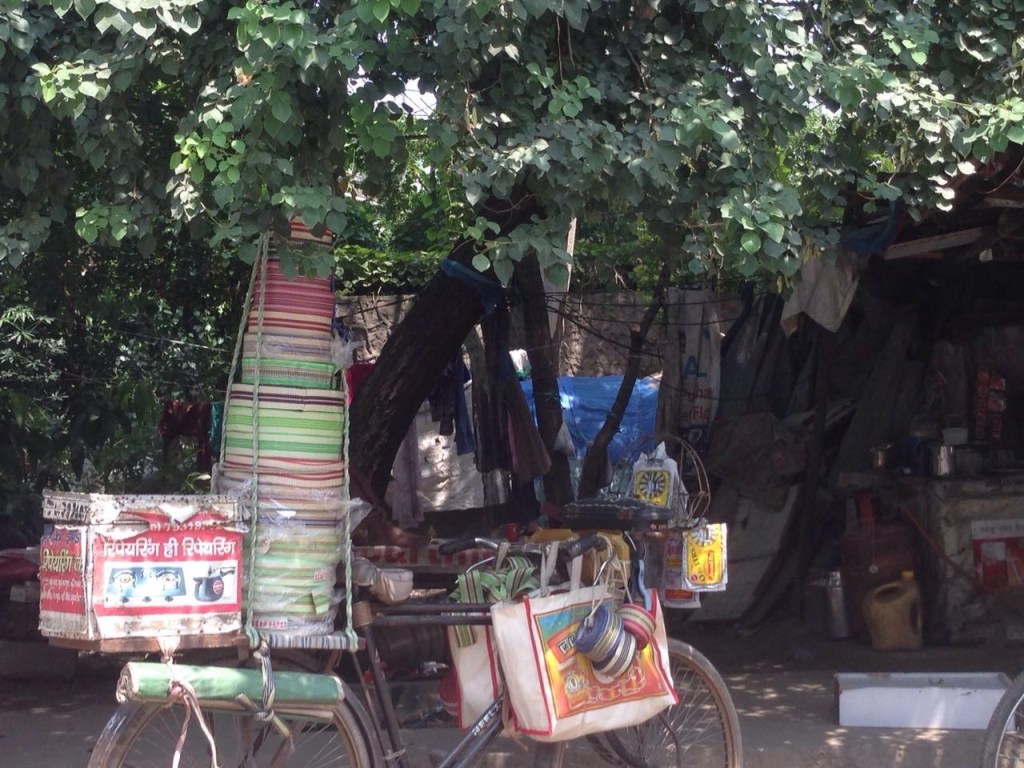
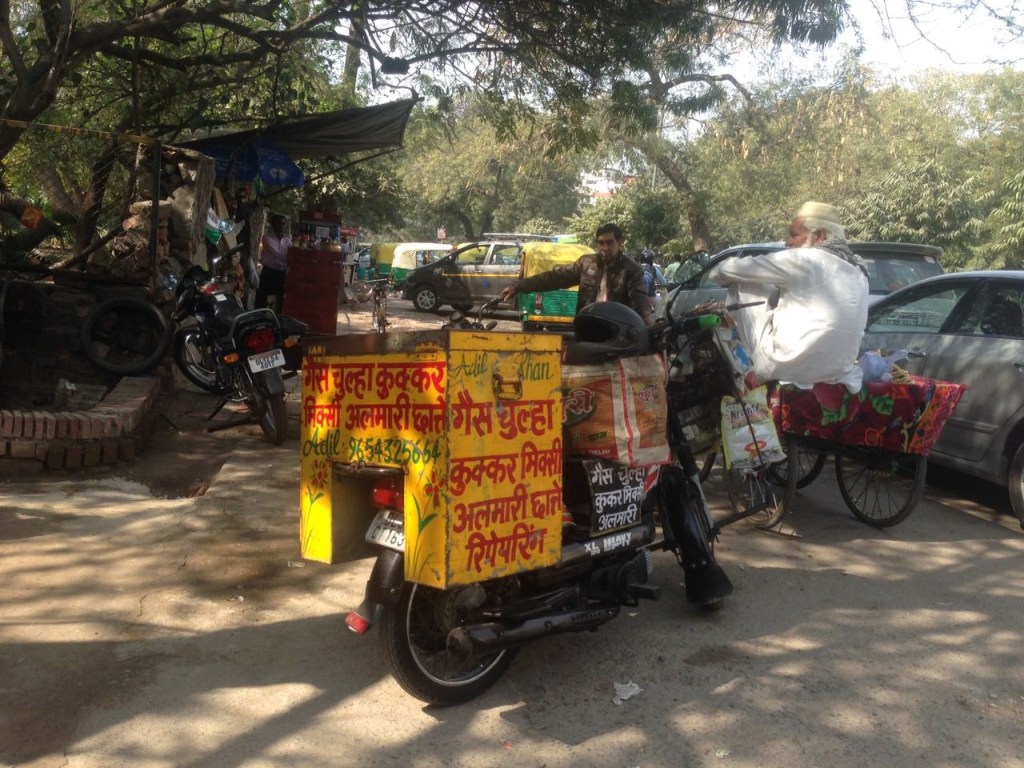
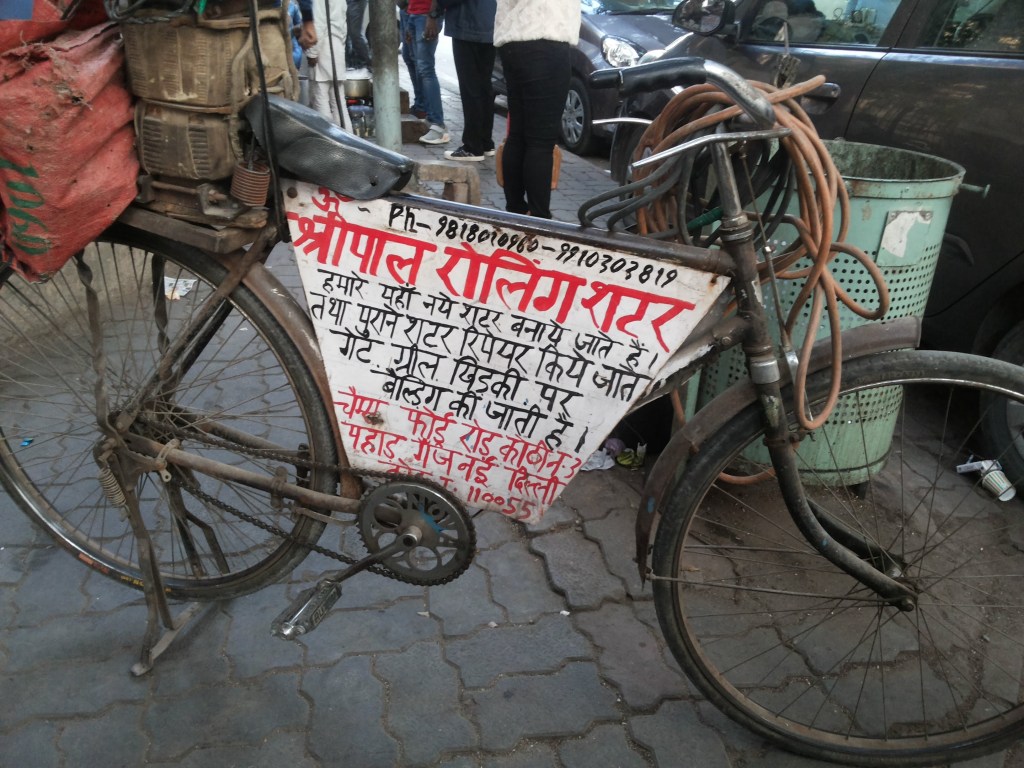
This photo essay pays attention to one site of repair—shops providing this service in the streets of Delhi. While some kinds of repair shops such as mobile phone repair are proliferating in the city, others are slowly disappearing and are difficult to locate. There are vast differences across neighbourhood types—you may not find a single cobbler in an affluent neighbourhood, while there will be at least one in every middle- and low-income locality. But there are also entire neighbourhoods the livelihoods of which depend on salvaging and remaking discarded objects.
The practice of repair is discreet, ordinary, and invisible, often only perceptible to those who engage in it or those who seek it out. Yet it is also ubiquitous, located at the level of households, marketplaces, cities, social relationships, political life, and myriad other scales and registers.
This set of photos is from my fieldwork in Delhi’s neighbourhoods in the course of searching for, stumbling upon, and mapping diverse repair shops. It is part of a larger project aimed at understanding how urban living is shaped by repair practices, the techniques of repair, and the material and social life of repair shops. Every specific repair practice, whether it is cobbling, darning, mending cots, or something else, has it ways of doing or techniques. Repair is not simply about replacing a part or sticking something broken together. Its techniques involve intricate knowledge of objects and materials, dexterity in handling these, and are learnt and honed continuously through the practice.
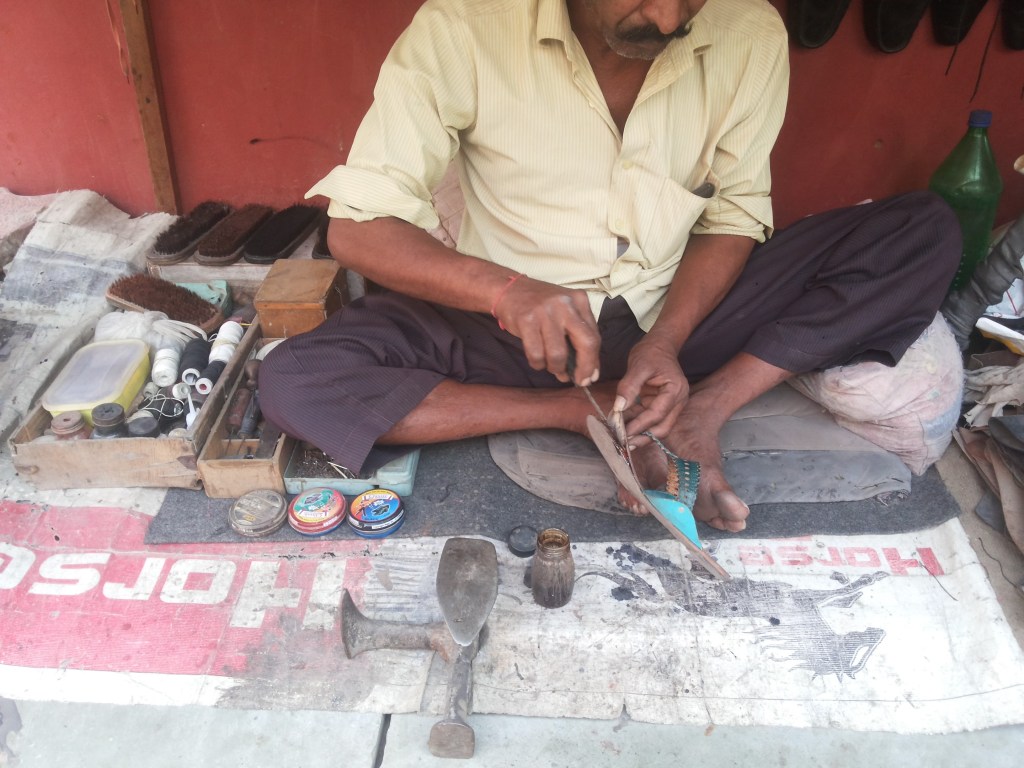
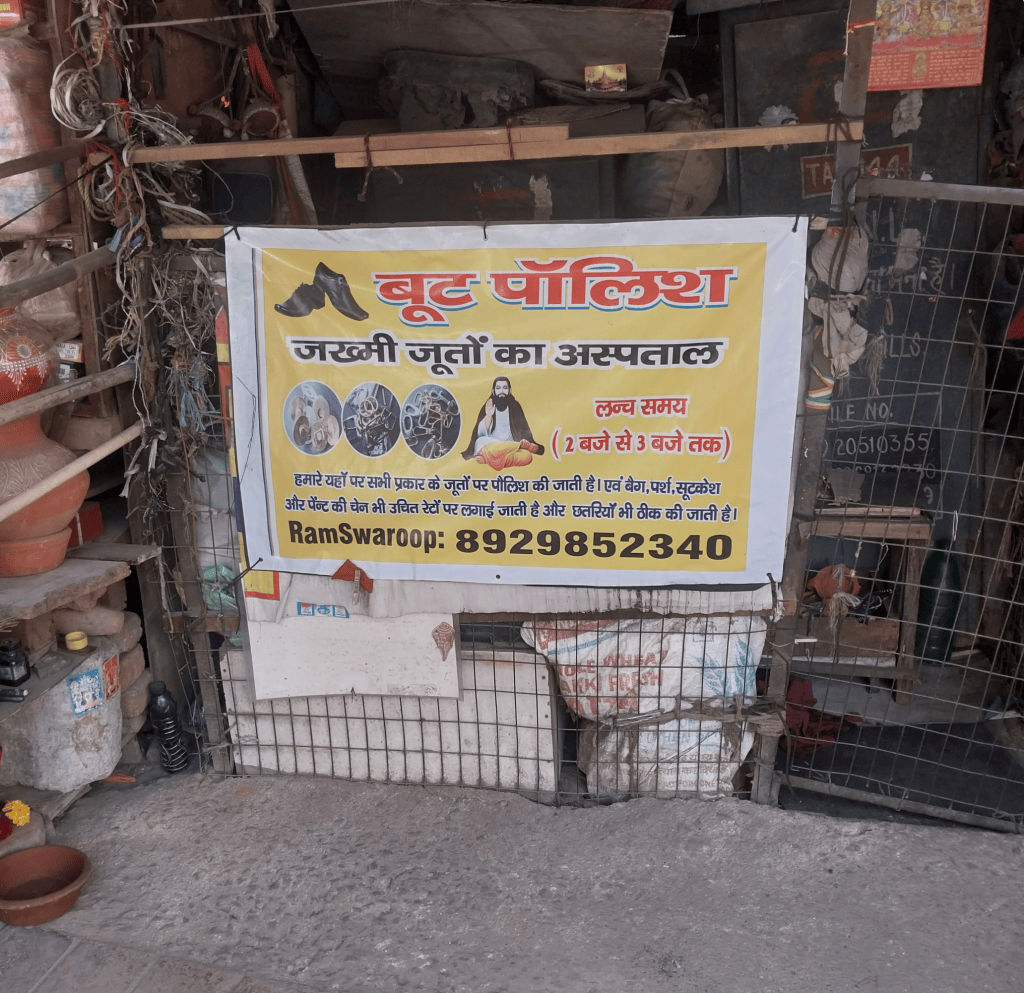
Repair shops, easily missed or bypassed amidst the profusion of new and sparkly commodities on sale in shops and stalls in neighbourhood markets and streets, are more than just a site where a service is provided. Much like the practice of repair, these shops hold together much more than what is visible: years of apprenticeship, skills passed over generations, caste-based occupations, negotiations and frustrations of plying a trade in the street, relationships of trust with customers, a sense of pride in the work.
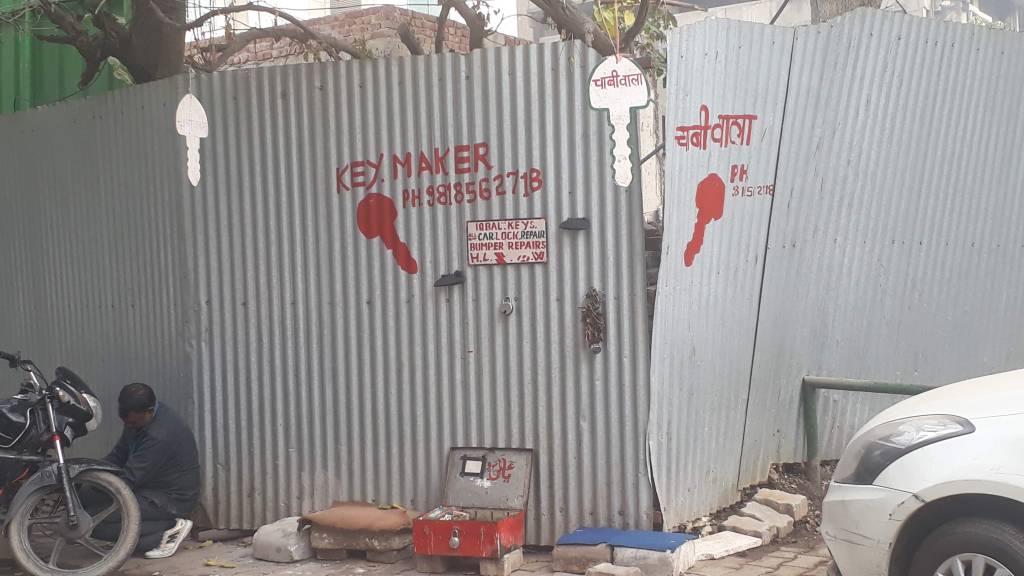
On closer examination, the visible materiality of the shops has much to reveal. The shops themselves are a form of remaking, having been incrementally carved out by combining a patch on the ground, a wall, a grill, the branch of a tree, or a corrugated sheet with discarded materials—tables, trunks, flex banners, pavers.
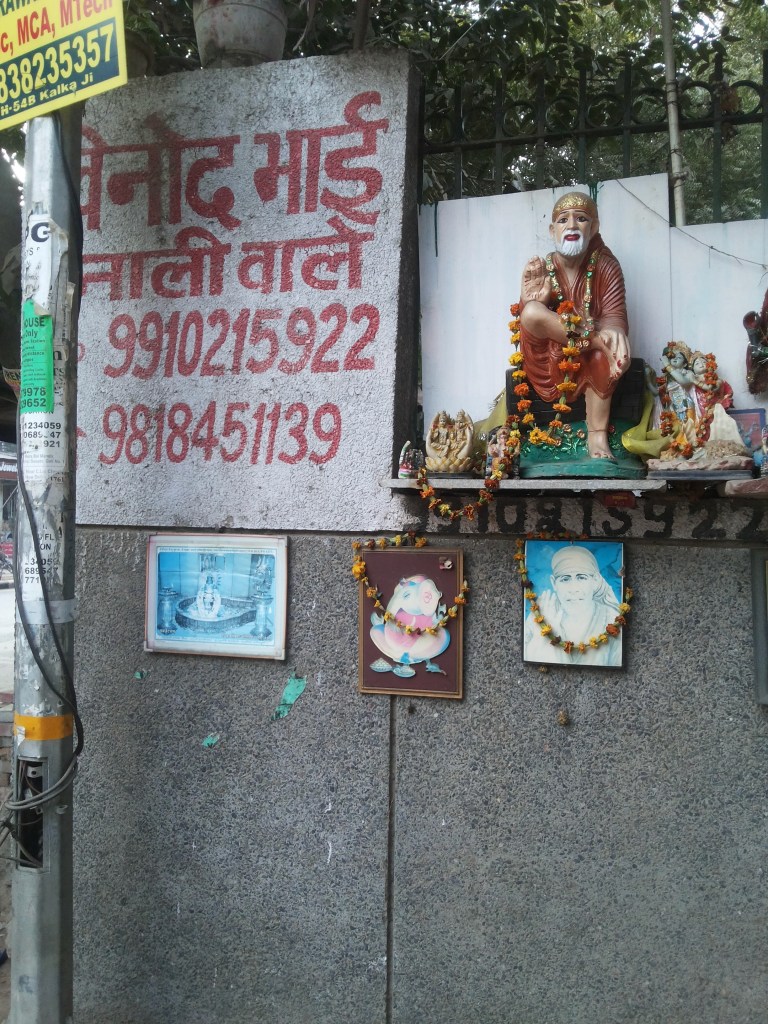
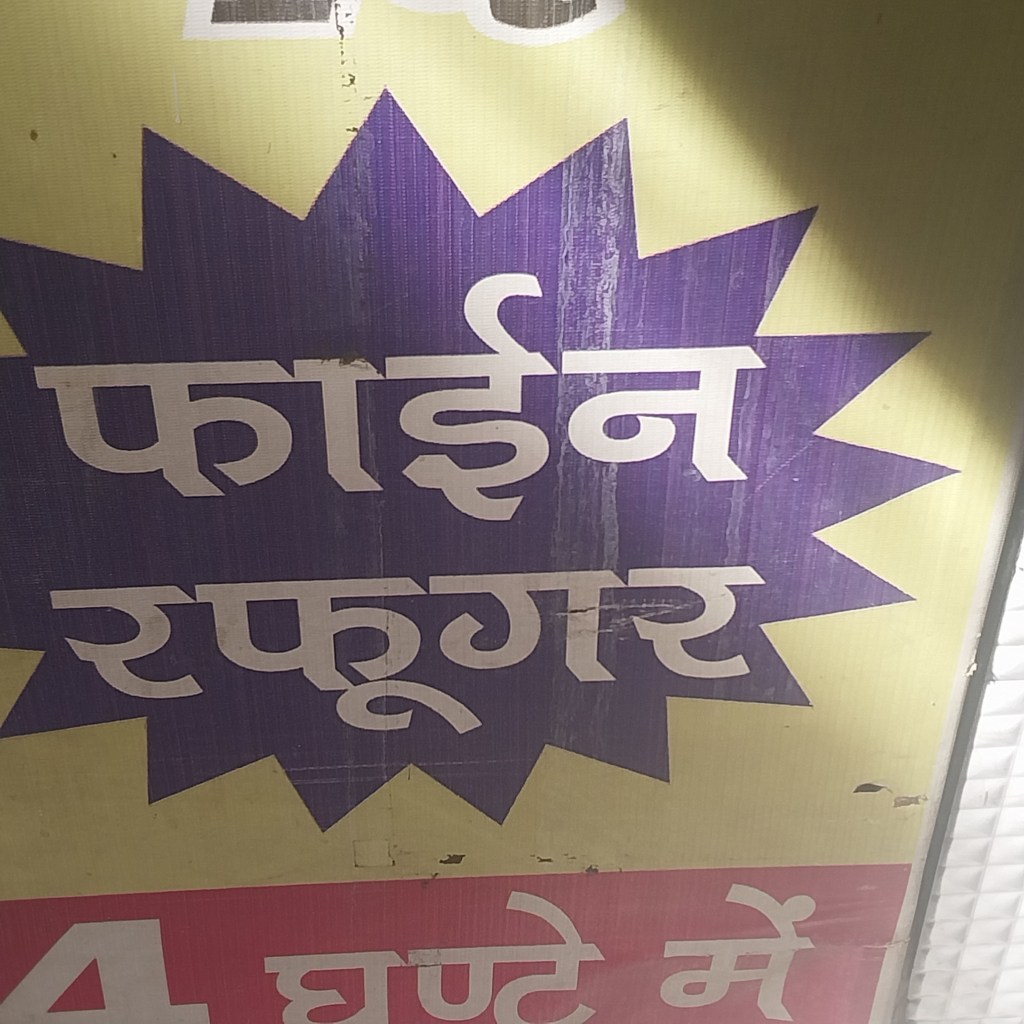
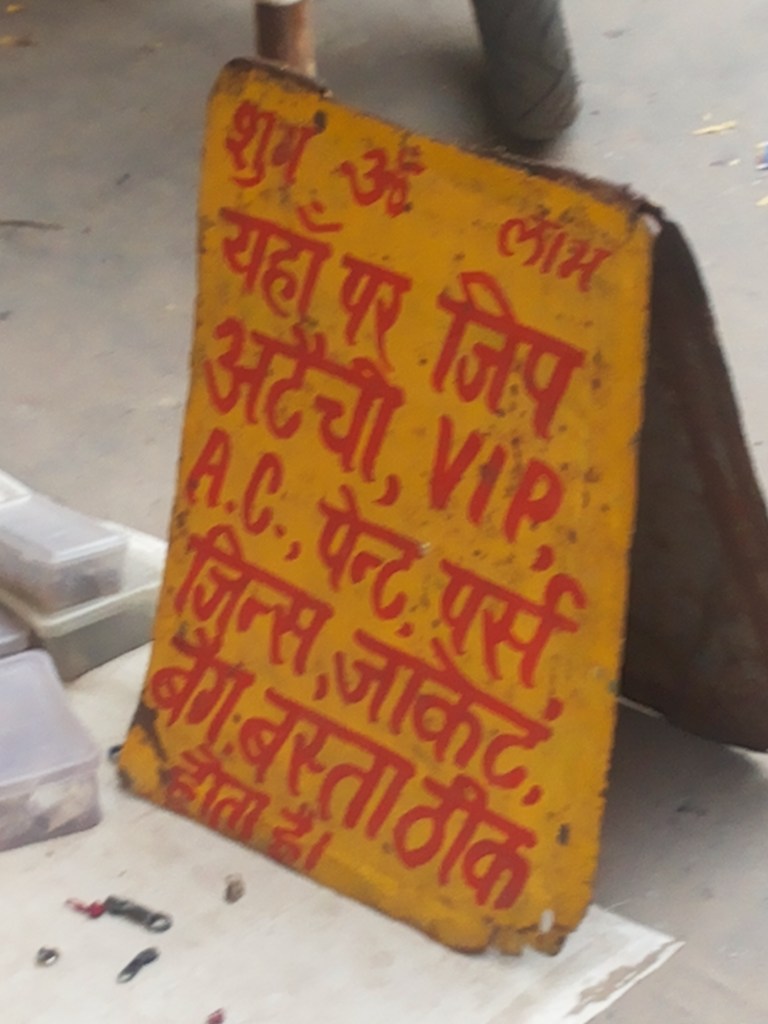
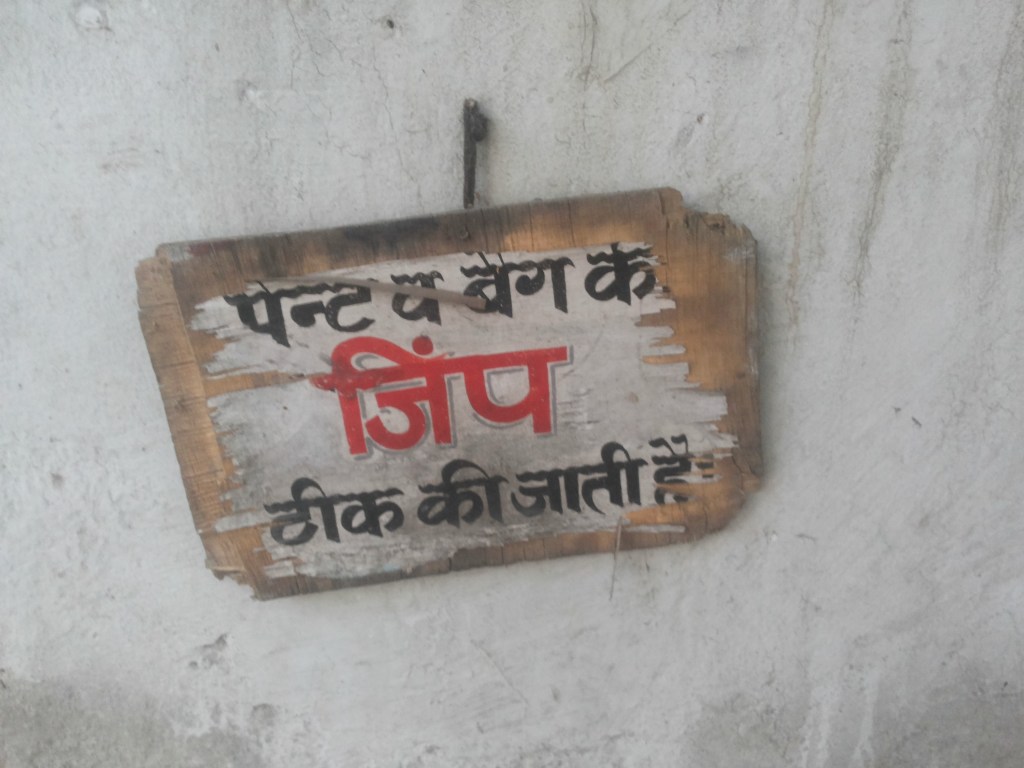
While some shops reveal their identity just through the objects arranged on their surfaces, others mark themselves out through bright and faded signage, hand-painted in messy or beautiful lettering or printed with pithy or detailed information. From the arrangement of tools and parts to the choice of colour and text on a signage, the way these shops are put together conveys intentionality, care, and an affective tie with both the space of the shop as well as the repair service the shop offers.
The shops themselves are a form of remaking, having been incrementally carved out by combining a patch on the ground, a wall, a grill, the branch of a tree, or a corrugated sheet with discarded materials—tables, trunks, flex banners, pavers.
The practice of repair is discreet, ordinary, and invisible, often only perceptible to those who engage in it or those who seek it out. Yet it is also ubiquitous, located at the level of households, marketplaces, cities, social relationships, political life, and myriad other scales and registers. It is nestled in the interstices of production, consumption, disposal, and destruction through intricate and multifarious forms of labour and skills that reproduce everyday life, through practices of frugality invested in stretching the life of everyday objects, through modes of love and attachment in which holding on to the old is valued more than a desire for the new.
An old faithful umbrella with a broken handle, a battered mixer grinder you can’t yet afford to replace, the favourite pair of jeans with torn seams, the jacket which had been a gift and has a malfunctioning zip—for all these and many ordinary things, repair encompasses both the expectation and the promise of making the broken and the unfit, whole and functioning again. Repair tempers the linear time of progress, creating tiny ruptures in the entrapment of incessant and rapid consumption, upgradation, and discarding. The repair shop also extends the life of various objects that the city discards, folding it into its own making. The shop and the repairer signify tenacity in keeping alive certain skills, delaying their obsolescence. And in their small way, repair shops also repair the street from being a dead space of transit to a lively public place of connections that sustain livelihoods and sociality, a place to pause in, interact with, return to, and seek out.
1 Tea seller, vegetable vendor, and grocery shopkeeper, respectively.
2 Person who provides ironing services.
Samprati is a social anthropologist and an affiliated fellow at Max Weber Forum for South Asian Studies, Delhi. Her doctoral work examined the conditions of making and unmaking of neighbourhood bazaars in Delhi through the relationality of diverse practices. She is the co-founder and editor of the blog Chiragh Dilli.
economy fieldwork India photo essay reflections urban ethnography visual-ethnography anthropology economy ethnography markets photography repair urban


