
Messy Methods: Ethnography Under Structural Violence
27 March 2026
Priyanjali Mitra
I initially intended to study the working lives of migrant workers in a city I grew up in and thought I knew. What I was not prepared for was how consistently those conversations kept turning toward fear, precarity, everyday violence as one register of a much larger, layered order of harm — as if work and violence were not separate subjects but intertwined. Gurugram is no stranger to it. The city carries decades of sedimented harm, much of it produced by neoliberal models of urbanism: the grinding, everyday violence against its vast working-class population; the sharper, more explosive ruptures of communal conflict between Hindus and Muslims — most recently in the riots of 2023[1], when my interlocutors, Muslim migrants, found themselves suddenly scarred, calculating whether to pack what they owned and return, temporarily, to the villages they had left behind in West Bengal.
It was in this charged, unsettled atmosphere that I first met Ahmad in the summer of 2022.
“Your full name?” I asked. “As per Aadhaar?” he half-asked, referring to his government biometric ID. “My full name is Mohammed Ahmad.”
He said he was thirty-two, then paused and corrected himself — forty-two. We were sitting in a service corridor of a mall in Gurugram, beyond the polished atrium where the air smelled of cleaning chemicals and hummed with industrial ventilation. The break room for staff was too exposed. He did not want to be interviewed there he told me. The corridor offered just enough cover for a quick conversation. We had forty minutes before the next shift began. He had worked there a decade, not for the mall itself but for the company contracted to maintain cleanliness. He managed a team of eighteen, sometimes twenty men, though the number shifted depending on who showed up. He worked every single day including Sundays.
“If you’re unwell, take a day maybe,” he explained. “But if you take too many without notice, they cut your salary.”
“How much do you earn every month, dada (brother)?”
“Ten to twelve thousand now,” he replied, mechanically.
He narrated his path there as a timeline chronicling all the places he had worked: a wire factory in Delhi in the mid-1990s, security work in a building, a car factory in the same state, a genset company, then finally Gurugram in 2006, post marriage. None of it through formal channels. Each job had come through someone he knew — mostly other Bengali friends and acquaintances, through phone numbers passed along, names scribbled on SIM card packets. He paused to show me photos on his phone: his plot of land in the village in Bengal, foundation poured, walls up, tile choices still pending. Ten to twelve lakhs of investment from their savings already. He zoomed in and out on the images longer than I expected, as if to reassure himself the work had taken shape. The house gave his years in that corridor a direction — a future that could be pointed to, even if it remained unfinished.
Parents to two young children, Ahmad and Safeena have lived in Chakkarpur, my field site, for over two decades — long enough to have watched the city fold itself around them, to have seen whole neighborhoods demolished and rebuilt, to have outlasted several rounds of neighbours who came and went. Our early conversations ranged across all of this: the changing city, the cost of rent in 2006 when they moved here versus now, the factories Ahmad had moved through in Manesar before landing at the mall. I came with questions about work and migration. What I was not prepared for was how consistently those conversations turned — not dramatically, but quietly, almost procedurally — toward fear and the experience of violence in the city. Not fear as an event or a memory necessarily, but fear as something closer to weather: a generalized condition that structured what you did in the morning, which route you took to work, whether you kept identification papers close. It took several visits to understand that this was not a digression from what they were telling me about their working lives. It was the main thing.
It shaped my fieldwork in ways I had not anticipated. Violence arrived in different registers — the grinding, quotidian kind, and the more explosive, event-driven kind. Construction workers reported being routinely called haraami bangaali(bastard Bengalis); workplace abuse was so normalised it barely registered as worth mentioning. The slurs surfaced repeatedly when men spoke with me, deployed as self-deprecating humour while carrying the full weight of the violence embedded in them. At the other end sat something harder to name: identity checks, sudden detentions, the creeping legitimisation of atrocity in mainstream discourse — violence that marked certain bodies as illegal and others as rightfully threatened. These were not random violences. They clustered around the same bodies — Bengali Muslim migrants whose class position, religious identity, and legal precarity made them legible to the city as a population that could be exploited, surveilled, and periodically expelled.
I learned to map the urban village atmospherically as much as socially — which lanes felt different after dark, which hours made my presence conspicuous, which parts of the neighbourhood were best avoided in the aftermath of an incident. Visits got rescheduled not according to my calendar but according to the neighbourhood’s mood, the week’s tensions, my interlocutors’ advice — whether something had happened that made an outsider’s presence feel ill-timed or unsafe. Some topics I approached only obliquely, faith and identity among them, over many visits, waiting for the moment when they could be raised without closing the conversation down.
What I was learning to do, I came to understand, was a modest version of what my interlocutors practised every day- reading atmosphere, calibrating movement, deciding what could be said and when. The difference was that I could leave. They had decided to stay.
The messiness of this fieldwork mirrors the messiness of the lives it accompanies. But messiness here is not a confession of methodological failure — it is an insistence that structural violence resists tidy categories.
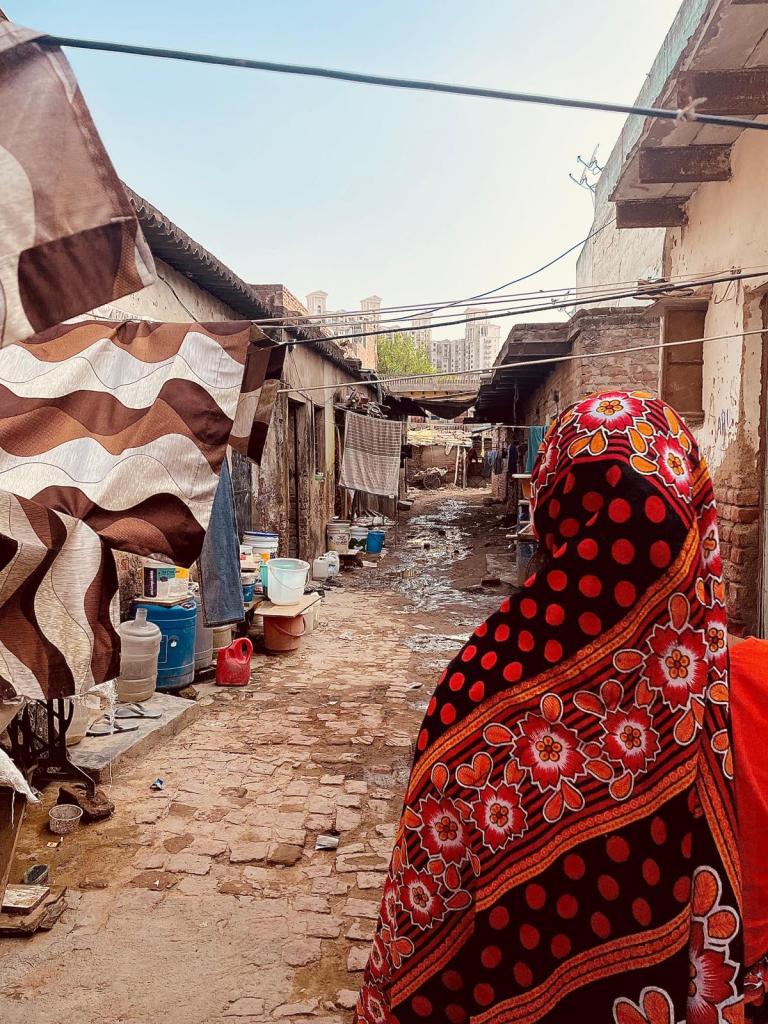
In 2024, after a Nepali migrant worker was run over by a local landlord’s inebriated son whilst driving his jeep, Ahmad called and told me not to come. Not for a few days, for the week. There were demonstrations outside the local police station led by workers against the son getting bail. He was worried about his peers, his family, and, he said, me. I told him I understood, then asked — as if the question made sense — whether it might be alright to come during the day. It doesn’t matter, he said. It doesn’t work like that here. I did not go for the week. In my fieldwork calendar that stretch appears as a gap, a series of blank days. But Ahmad’s instruction was itself information: about how quickly an urban village can reorganise around an incident, about who bears the cost of that reorganisation, about the difference between my understanding of risk and his. I had been thinking in terms of visibility — daytime, less conspicuous. He was thinking in terms of atmosphere, collective mood, the slow pressure that builds in a neighbourhood when justice feels unlikely. He knew something I didn’t, and he knew that I didn’t know it. The gap in my notes is not an absence. It is what he taught me that week. When I went back a week later, the tension was still palpable, workers were circulating the gruesome whatsapp videos of the incident, recounting different versions, and expressing anger and remorse.
With respect to calendars structuring fieldwork, the domestic workers I interviewed, Safeena among them, usually preferred when I came post-lunch — the narrow window between getting home and the evening shift, enough time for a meal, some laundry, feeding the children. I often stayed on to look after the children for a few hours while the mothers left for their evening shifts — monitoring TV time, supervising homework, making sure they stayed within a radius of the tenement as they played. Safeena told me more than once that keeping the children close, keeping them occupied, was itself part of her work — that idle time in this neighbourhood carried its own risks so it had to be managed. There were enough instances of kidnappings and the children subsequently never being found that made her constantly worry about them. Yet, she couldn’t keep them locked in the room when she left for work. She and Ahmad sent the children to computer classes in the evenings at an NGO centre close by twice a week, so they could spend time ‘productively’, as she put it. Brother and sister walked there together, never alone. On Fridays she sent them for Arabic lessons to a tutor in the neighborhood. What Safeena rarely said directly about the neighbourhood, she had already organised her children’s hours around. These calendars structured time for our conversations too.
Here I grapple with a methodological problem that is simultaneously an ethical one: how does ethnography proceed when the conditions that make fieldwork possible are the same conditions that render your interlocutors vulnerable? When Ahmad meets me in a service corridor rather than a break room, when Safeena reschedules for the fifth time because fights have broken out in their tenement; or when families carry document folders everywhere — these are not obstacles. They are the method, or at least they must become so.
Here I grapple with a methodological problem that is simultaneously an ethical one: how does ethnography proceed when the conditions that make fieldwork possible are the same conditions that render your interlocutors vulnerable?
I want to be clear that ethnography under conditions of everyday structural violence offers no clean methodology, no tidy protocol to follow. The process is genuinely messy: plans collapse, access closes without warning, the field reorganises itself around incidents you did not anticipate and cannot control. What ethnography offers instead is a way of staying in that mess without pretending it can be resolved — following rather than pursuing, folding into routines already calibrated to threat, allowing others’ refusals and postponements to structure what knowledge can be made and when. A cancelled interview for instance is not a methodological failure but information about what the city makes unsayable on a given day. Incompleteness is not a limitation to overcome. It is what honest fieldwork under these conditions looks like.
Months later, at my desk, the audio from these interactions becomes waveforms. I code—wages, advances, eviction, demolition, housing, referrals, lockdown. This is where accompaniment collides with coding, where my method of staying alongside is forced into analytic categories that risk flattening the very lives it seeks to understand. In the browser window beside my coding software, headlines from the latest news accumulate: verification drives, detentions, demolitions, riots, illegals.[2]
Verification does not arrive as an exception. It is anticipated, discussed, planned around. Families keep document folders ready, phone numbers memorised, routes recalibrated. The city does not announce these moments in advance; their predictability lies only in the knowledge that they will return. What the state calls verification, migrants experience as a suspension of ordinary life, where belonging must be rehearsed aloud, on demand.
In my codebook, Bengali and Muslim appear as filters, not lives. I tag a segment “house as asset” while a tab beside it shows homes demolished for lack of papers. My coding sorts narratives; the city sorts who gets to sleep at home. If method is relational, then the discomfort of this translation belongs in the archive as well—the moment when accompaniment is forced into categories, and something essential feels lost.
There is a low, stubborn helplessness that seeps into fieldwork when identity-based persecution is so routine it is almost budgeted for, anticipated, scheduled around. My interlocutors speak of Malda (West Bengal) with a quick glint in the eye: fish cooked right, green fields, the solidity of home. In the same breath, they map the city—rent increases, school admissions, which lanes feel safer after dark. Nostalgia steadies them; planning armours them. Home becomes both compass and refuge-in-speech, even as life is calibrated to a city that can unhouse you overnight.
In my codebook, Bengali and Muslim appear as filters, not lives. I tag a segment “house as asset” while a tab beside it shows homes demolished for lack of papers. My coding sorts narratives; the city sorts who gets to sleep at home. If method is relational, then the discomfort of this translation belongs in the archive as well—the moment when accompaniment is forced into categories, and something essential feels lost.
For Safeena, becoming a domestic worker marked her entry into the city’s vocabulary. Thāla-bāti in her native Bengali became plate–katora (bowl)–spoon in Hindi. The mop had a new name, the flush a mystery until someone showed her the lever. Guards once wrote door numbers on paper so she could match letters outside apartments. Now she laughs: “I know everything.” Her confidence is hard-won and local, learned through corridors, watchmen, and observing her employer. Work, too, was a language she learned in rates. In 2007, she earned ₹600 for two shifts. “I didn’t know the words,” she says. “Maybe that’s why they paid less.” Today, ₹5,000 is the apartment rate for cleaning—unless a referral blunts negotiation or desperation undercuts the floor. “First, kaaj,” she says plainly. “Then we will see the rate.”
Over the past decade, Bengali Muslim migrants in Gurugram have lived under the periodic threat of verification drives — administrative exercises framed by the state as routine checks but experienced as something closer to a sudden suspension of ordinary life. Police arrive at tenements, sometimes at night. Documents are inspected: Aadhaar cards, voter IDs, birth certificates, proof of address. Those who cannot produce the right papers on the right night risk detention, sometimes deportation back to their village until the local institutions can verify their identity. The drives target Bengali Muslims with particular consistency, on the logic — rarely examined, widely applied — that Bengali-speaking Muslims are likely to be undocumented migrants from Bangladesh, regardless of how long they have lived in India or what papers they carry. Being Bengali and Muslim functions less as identity than as suspicion. It marks certain bodies as perpetually provisional in the city, their belonging always subject to verification, always one night away from being called into question.
In December 2025, Safeena called me from a railway platform in Malda. The children were buzzing to return to the city after two months at their grandparents’ house—missing their lane, their uniforms, the Arabic teacher who is “strict but funny.” They had gone back primarily because their mother needed surgery. On the train, they argued over seats and planned a momo stop at the market. “We’ll be back in time for the unit test,” the older one kept saying, as if the school calendar could pull the train forward.
Safeena felt the opposite tug. Frantic calls were coming in from neighbours in the city about increased surveillance and verifications. Men were being picked up and taken to distant detention centres. These calls coincided with newspaper reports I was reading at my desk in Chicago about the illegal detention of migrant workers in Gurugram. She carried a plastic folder with tickets, Aadhaar copies, birth certificates, and school admission papers; a surgical wound on her side still aching from the month before; and the voices of relatives urging her to stay back in the village—mahaul kharap hoye geche (the atmosphere has worsened here), wait till it settles.
But rent does not wait. Nor do school fees, nor employers who say “come tomorrow.” Afraid but obligated, she boarded.
This paradox — children rushing toward routines that keep them safe, a mother counting risks and responsibilities — is how everyday violence enters family life. Not always as an event, but as an arithmetic that folds risk into ordinary decisions. For fieldwork, this arithmetic becomes method. The children’s packed schedules are not just aspirations; they are protective routines. Safeena’s document folder is not paranoia but preparedness – a folder I would see in several working class migrant households. Ethnography in this context meant following lives lived under anticipatory threat, where movement is never casual and planning is never neutral. It requires refusing to demand presence when absence is protective, reading postponement and “busy” as data, and allowing risk to structure how and when knowledge can be made.
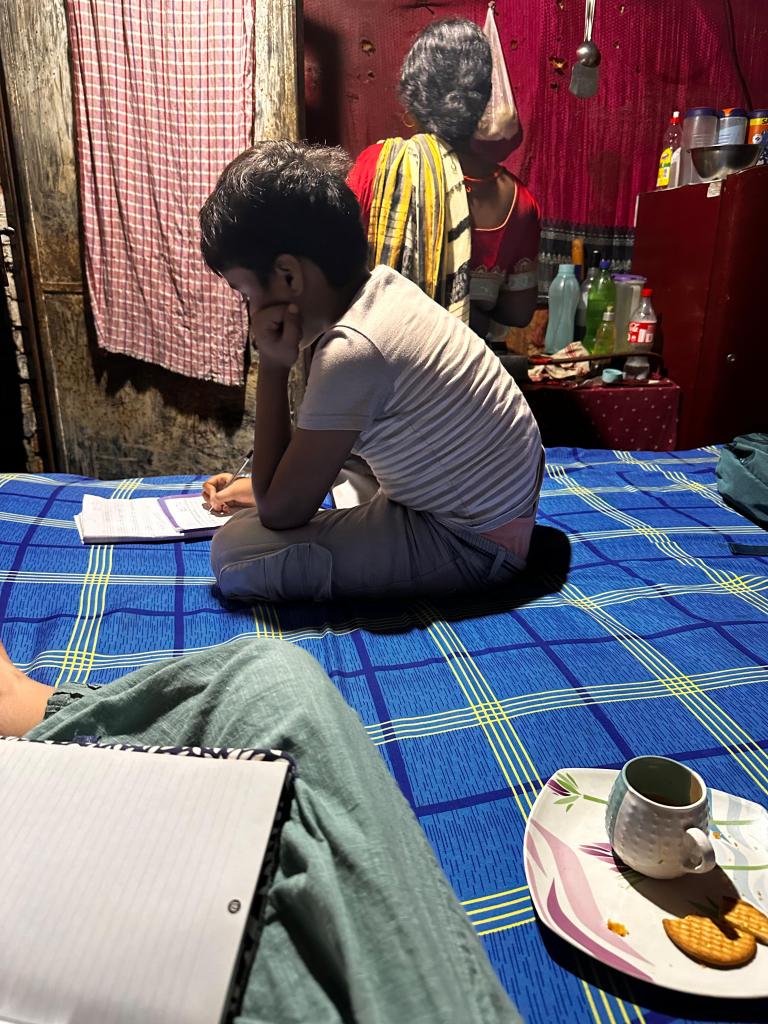
The messiness of this fieldwork mirrors the messiness of the lives it accompanies. But messiness here is not a confession of methodological failure — it is an insistence that structural violence resists tidy categories. When verification drives are routine enough to budget for, when children’s schedules double as security protocols, when a mother boards a train carrying both surgical stitches and citizenship documents, violence has already organized what can be said, when, and at what cost.
Under structural violence, ethnography cannot proceed as extraction — dropping in, asking questions, leaving with data while your interlocutors remain exposed to the risks that shaped what they could and could not say. The questions I did not ask because asking felt dangerous, the fifth rescheduled meeting logged not as inconvenience but as information, the coded segment I sat with uncomfortably knowing the category held less than the life — none of this is incomplete ethnography. It is ethnography that has stopped pretending incompleteness is a failure to be corrected rather than a condition to be accounted for. But I want to be careful not to make even this sound cleaner than it is. I left the field. Ahmad and Safeena did not. I decided when to open the coding software; Safeena continues to carry the document folder whether she wants to or not. There is no methodology that makes this symmetrical, no consent protocol careful enough to dissolve the fact that my work is made from risks I do not experience in the same way. What I can do is refuse to treat that asymmetry as incidental. To name it in the work, not bury it in an ethics section. To stay with the discomfort of having benefited from precisely the conditions I am documenting.
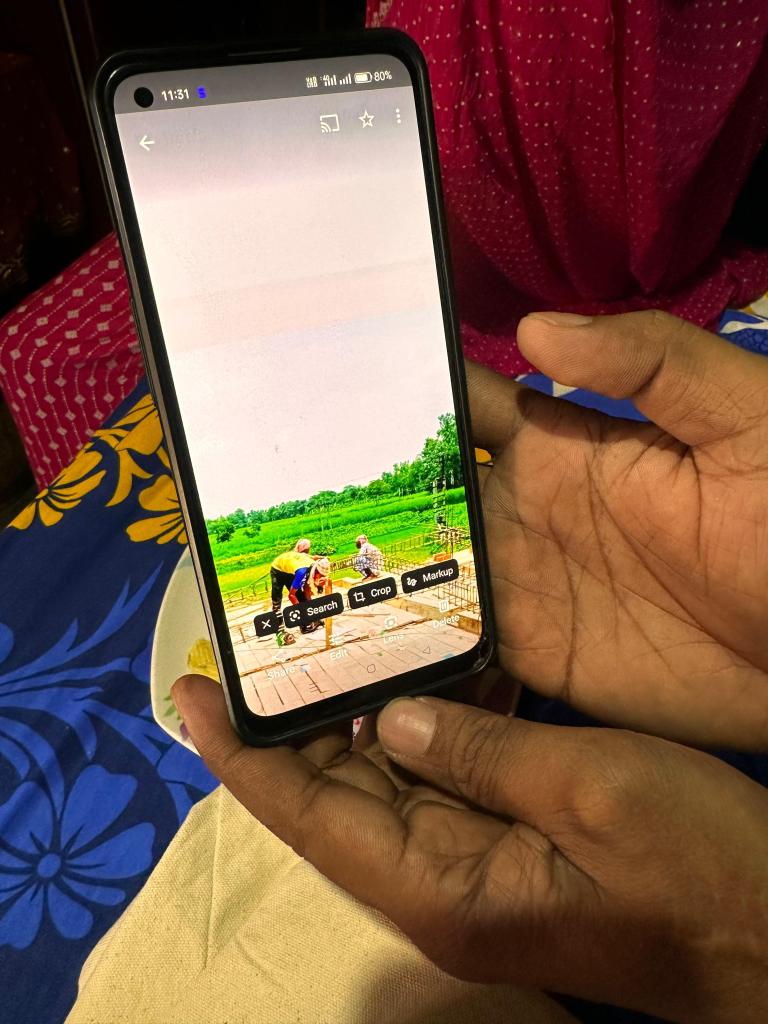
The last time I spoke to Ahmad he was showing me photos of the house again, zooming in on the half-tiled bathroom, the pending electrical work. He says it should be complete by the end of 2027. Ready to move in. He still goes to the mall every day. Often walks back – having to watch his back and his route. The house is still unfinished. So is this piece, in a sense — not for lack of trying, but because the lives it follows have not resolved. Ethnography does not end with a finding or an aha moment. It ends, if it ends at all, with a practice: follow rather than chase, mark what you could not access, and refuse to call what remains incomplete a limitation rather than what it actually is — the shape of the knowledge this field allows.
[1] https://www.bbc.com/news/world-asia-india-66391587
[2] https://www.bbc.com/news/articles/crevjxgqwnjo
Priyanjali Mitra is a PhD Candidate in the Department of Sociology at the University of Chicago, working on labour precarity, urban informality, and social reproduction. Her research examines how migrant households in Global South cities negotiate the conditions of their own exclusion — through gendered labour arrangements, translocal care networks, and the informal infrastructures that stretch across rural–urban circuits.
She can be found on X (formerly known as Twitter) at @priyanjalim1
fieldwork Methodology mobility research process structural violence urban ethnography academia anthropology ethnography India reflexivity writing


