
Of Marital Rape, or “What do they do when they can’t find a body?”
11 October 2024
Urmi Bhattacheryya
What follows is a piece of fiction, written for a PhD-level seminar called “Feminist Media Studies” at the University of Colorado, Boulder, instructed by Dr Michela Ardizzoni. However, what it also is, is a pastiche of life experiences and voices that have been articulated to me, over and over again, through years in sexual violence-journalism and now in an ethnography-rich PhD: experiences and voices of the marginalised and the liminal. It was during my longterm research for a book called After I Was Raped, that told the stories of the aftermath of rape in India, that I was told, plentifully and painfully, by interlocutors, of the embodied absence of a marital rape law. A language for the crime did not exist, marital rape counsellors (who could not call themselves thus) told me in a Kolkata shelter; there, survivors resorted to metaphors like “taking” and “giving” and “snatching” in non-English languages to report their experiences. How could this be better codified and understood? How could a contribution be made both to scholarly literature, and to the on-ground lacuna of justice for certain citizens, invisibilised by state processes? This was what brought me to a research career – and to my project that asks, how are identities made and forged in the world’s purportedly largest democracy, where women may survive silent, chronic, long-term rape within marriages? What axes of citizenry do women still inhabit and claim as their own, in the light of publicly invisible sexual violence events, constrained to a space of socio-legal liminality? I do not know what the answers are at this juncture, but I hope this piece of “fiction” will help…for it is more than fiction. The voices in the short story that follows are embodied voices from the field – the problem that cannot be spoken of, is a problem we must speak of. If, indeed, marital rape is such a liminal concept for law and legalese, family and society to grasp; if indeed it must be hushed, then perhaps, “fiction” – a sense of creating something “digestible”, something disseminable – will help.
It is but a start.
I.
Ishani had had three things happen this Monday morning, in her Baltimore flat (she refused to call it an apartment despite over half a decade in the States): her next-door neighbour had dropped off a late birthday cupcake at her door; the shih tzu on the floor above hers had sauntered down on his morning walk and pawed at the box, smushing the number 35 into the corner of her “Welcome” mat, and her shejo kaku had called (he never called): her father was dead.
There was no time to tell you, shejo kaku had said in a strained whisper over a WhatsApp call (had he truly spent no money, still, on acquiring an international calling pack, succumbing to the wiles of internet connectivity even at this time?) You remember how he was over the summer – blood pressure ill contained by the statins, cholesterol like a tidal wave: once down, then up. Of course his heart was going to give way some day. Albeit that’s what Ratan said – her septuagenarian uncle had added hurriedly, quickly ceding medical opinion to the ‘para’ doctor – everyone’s doctor in Mish-bagan, whether birthing or croaking.
When Ishani had been able to sit, she sat for many hours. Days? Weeks? When she woke up, the Air India logo on the seat flap in front of her eyes was intrusively crimson, irritatingly slap-slapping against her thigh: she pushed it away, unaware of when her eyes had started to sting. She felt sundered into a million pieces. Funnily enough, none of those pieces were here, in this seat with her, slap-slapping against her thigh, roaring at a hundred and five decibels through butterscotchy skies, a full hemisphere traversed in record time. No, most of those pieces were at home, in that decrepit red family home with the green shuttered windows – she was suddenly a child and Maa and Baba were alive, both, still, their voices announcing batter-fried bhetki – an easy bribe and hers for the taking if she would stop crying after a half-tiger, half-man poster of Rahul Roy on the back of a double decker bus.
Stop changing the channel behind my back, Romi – said Maa, half-cross, half-cajoling, Cartoon Network is Zee Cinema when my back is turned, and you’re watching Hindi horror, then wetting the bed at night. Her Maa laughed at the memory in her memory. Ishani did not laugh; she was cross too. Suddenly, there was Baba, lifting her off the stool in the verandah, her geography all asunder as she flailed, half-laughing, half-shrieking in his arms, looking like a bundle of spindly arms – like both her parents. They were soft and kind in this vision from a million years ago – at least to her, at least how she wanted to remember them. She would remember only the good – in visions interspersed with bright ink blots of vibgyor, filtered through Air India windows, arriving at a slant through the tremulous prism of her lashes.
Had it been 11 years already since she had seen the two of them together in one room? Maa had passed when Ishani was 24 – the first time her heart had cleaved in a way no boyfriend could ever rival – at a time when Maa could still video call, weakened visage notwithstanding, Kolkata to Bengaluru, looking chagrined at the admission of missed breakfasts.
There was that irrepressible grief again – and the confused rage that tore at her as she felt the final piece of her heart be cleaved away clean: there was her father, his made-up stories, routine Saturday tring-trings when father called from harbours around the world (finish that mouthful first – your father won’t hang up!), stilted goodbyes at Kolkata airport, where Ishani could glimpse faint pride and resurgent loneliness in his eyes, as she walked, waved, flew, far away. She could remember the first going away afternoon like this one, like it was yesterday: the confusion writ large in her eyes, as her airplane heaved up the asphalt and belched into the skies…when realising Baba wasn’t enough to keep her around.
The wheels of the Air India screeched and threw light-weighted passengers up and out of their seats, inviting irate stares from stewardesses who had announced the seatbelt advisory six times. No matter, they were here. Home. Or at least the others were anyway. For Ishani, she was in a curiously liminal space, somewhere between home and oblivion.
II.
When violence is seen only as exceptional acts, addressing the myriad forms in which violence is present in women’s lives becomes difficult.
(Menon, 2021, p.71)
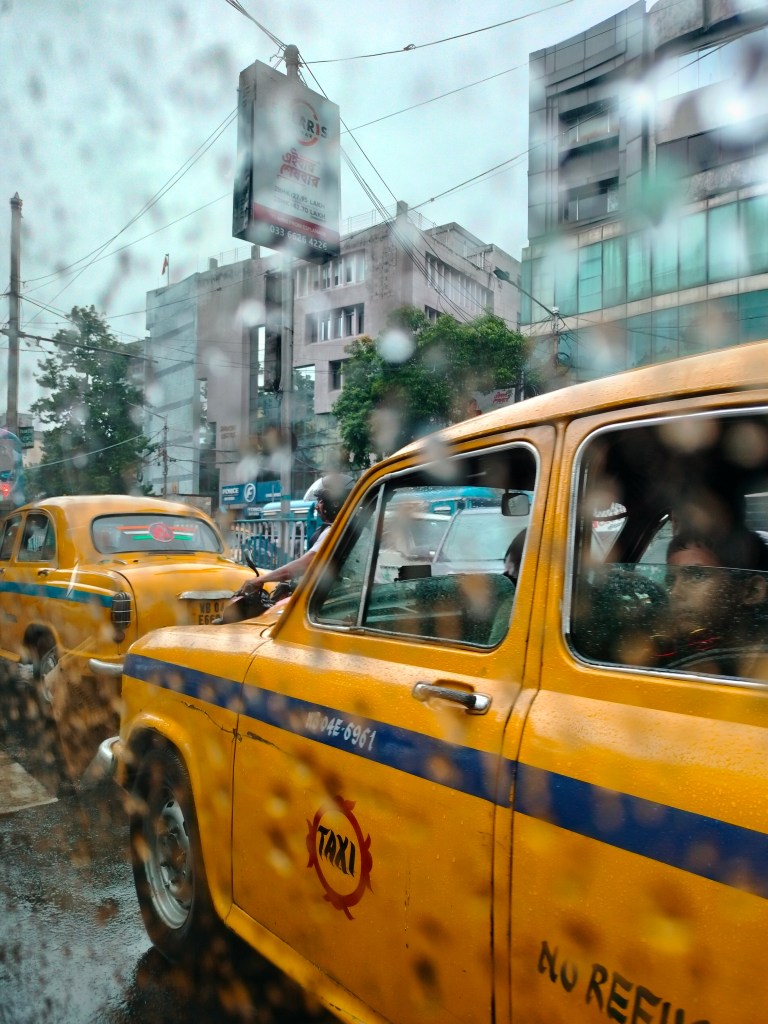
Ishani was five years old, and petulant. “I want to see the rain!” she shrieked. “You will fall sick – you did last time you danced on the terrace, remember?” her mother had pleaded to deaf ears, over and over again. Perhaps, she would like something else, instead? Perhaps, a sweet treat, perfect for the monsoons? A mango-laced yoghurt sherbet – or something salty and ketchup-streaked, particularly bad for the five-year-old (Maa would indulge her like that), like a pakoda? “Hot and crunchy,” Maa acted, pretending to smack her lips in mock relish. Ishani was incorrigible today – until a grunt sounded from the opposite room: her father had awoken, and he did not look pleased. The look of alarm on Maa’s face was unmistakable – she had let the inevitable happen; let disruption ensue. Baba launched himself into the room and reached Ishani standing by the half-ajar door to the terrace in just three long strides, commensurate for his six foot three height. Before Ishani knew what she needed to do – her ears had been roundly boxed. She felt her mouth open to scream – but the scream she heard wasn’t hers. Her mother’s voice rang out over the crimson edges of her newly-boxed ears and mingled with the crash-and-boom of the ear-splitting thunder outside. It was all noise; yet, it was all silence. Funnily even through the scream, Ishani heard silence: an eerie, ominous blanket of silence. Made up of two broken hearts.
She had always remembered the afternoon years after. It had puzzled her. She knew one of those broken hearts had been hers; she had felt its sound in the silence: whose was the other?
When Ishani was four and beginning to make the short walk to Montessori, Maa had told her of how Baba spent months at a time on a ship, inciting a thousand flights of imagination at once. What did the ship look like? Had she ever seen it? Why not – why did they argue over the ship so much? Maa had gotten red, and Ishani, all of four, had quickly changed the subject – even at four. Maa cried when she should look happy – when Baba returned from the seas, arms bowed down with cellophaned gifts for Ishani and Maa, making her squeal for joy, and Maa look just as nonplussed. Ishani didn’t know what that look was until much later. She knew it when she worked as a gender justice coordinator, some years after Maa was gone, her infectious laugh echoing in the sepulchral dining room where the remaining duo ate in silence.
She had seen that look on someone else’s face. I left him, then, didi, her interlocutor had said, face contorted into a thousand cries. But it kills me – it kills me – that there is no respite. That he could very easily remarry next month, and do this to someone else. Who’s going to believe me?
She composed herself and reminded herself that grief made you think strange thoughts, even when grief was as confounding and fractious as hers. Here lay before her paperwork Baba would never pore over again. Here they all were – sheafs and sheafs of nonsense figures only he could make sense of: joint accounts and fixed deposits, all in legible bank ink. He had explained it many a time before, every time he was back home from the Merchant Navy, all of Ishani’s teen age: one day we shall both be gone, and you had better know… she had wondered why her eyes had searched immediately for Maa’s in the room: how did she respond to the immediacy of such threats, to the prospect of her imminent release? Maa hadn’t looked up from her sewing.
Ishani could remember those mornings when Baba was home. When he was everything a girl could dream up, and Ishani felt like the luckiest girl in the world. When he held her hand and took her to New Market to buy her ribbons for arts and crafts, and glitter pens even though she hadn’t asked for those. Later, when she had felt more intrepid, she had asked for – and gotten – cassata ice cream by the mound, happily, stupidly, lolling against his back on the motorbike, licking away, singing duets together, father and daughter, until she would be almost home – rounding the corner to their place, and glimpse a faint sight of her mother from afar. Even from a distance, she had been able to tell – the face was crestfallen, the heart more broken than before. Then, Ishani had felt guilty. She had untwined her limbs from their vice-like grip around her father’s hips, and held the packet of glittery new goods at arm’s length, almost as if she hadn’t known how they’d gotten there. Baba had hopped upstairs and knelt in front of Maa, almost child-like in giddiness, and spouted a brand new tissue-wrapped crepe saree. He had held it up insistently until she had reached out and accepted it.
III.
Women embody forms of property: typically excluded from inheriting within circuits of natal and matrimonial property resources, their only access to those resources comes via the commodity of sexuality (and related productive and reproductive labor). The marriage economy…is where their economic survival lies. Marital rape is a categorical impossibility given the irrelevance of women’s consent.
(Basu, 2015, p.171)
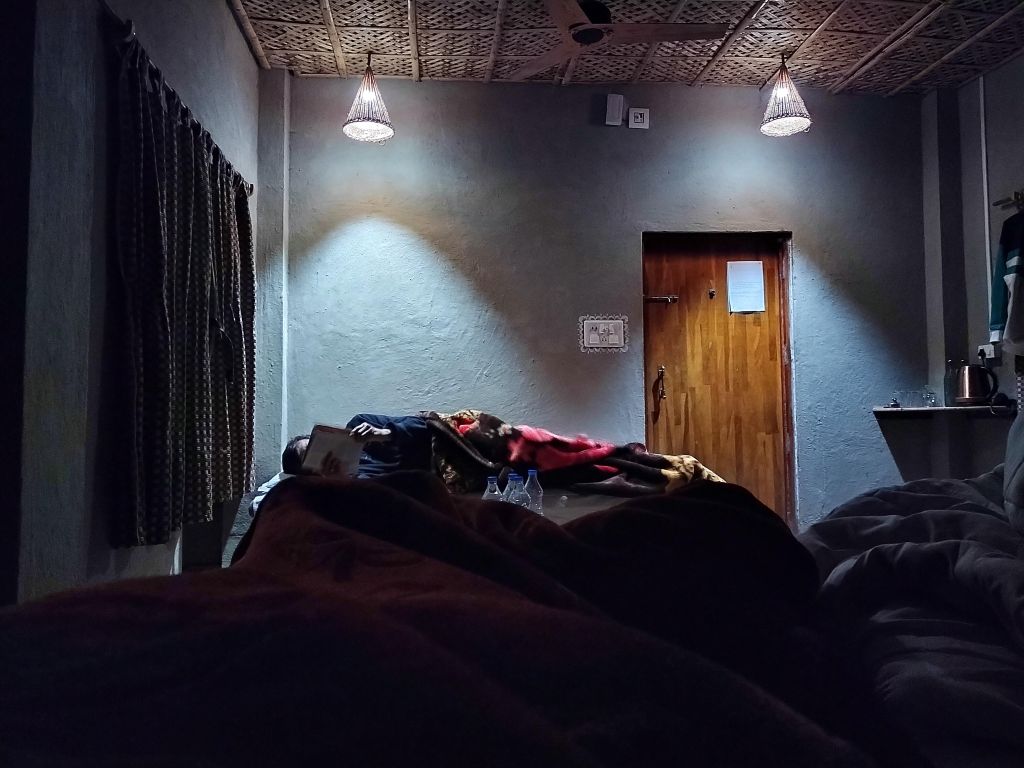
Leave me be, she had heard the unmistakable whisper of her mother’s voice. The old Snoopy Dog clock had struck two a.m., and Ishani had left her bed. She had had a nightmare. She had soft-footedly padded and plodded to the door of her parents’ bedroom and waited in silence for a sign.
I don’t want to – I don’t like this tonight, her mother had whispered again, only slightly louder this time, perhaps unwilling to wake her, oblivious to the wakeful witness at her door. Her father had not responded – at least not in words. Ishani had only heard animal-like grunts, very unlike any she’d heard him make before, once, twice, and then the rhythmic thud-thud of the bedstead on the concrete underneath her feet. Ishani had been afraid – very afraid – she hadn’t known why. She had only remembered the noises: very unfamiliar noises, sometime thud-thud, sometimes squeeze-squeeze, occasionally her father’s voice. His grunt. She remembered that she never heard her mother’s voice.
Ishani had never remembered how she had gotten back to bed that night, after having been frozen in time for what had seemed like an infinitesimal eternity. Her old nightmare had been forgotten; and replaced.
She heard them many times after, every time the first night Baba got back from his Merchant Navy voyages. Each time, he woke up a little happier, a skip in his step. Each time, she woke up, more subdued than before he had left home. She heard the same routine many times over. I don’t like it tonight – followed by let me be – followed by you’re hurting me (that last bit tore at her heart, made her almost enter their bedroom, unfreeze herself); then, she heard grunts, superseding her mother’s plaintive voice. She never heard her mother’s voice again those nights.
IV.
Through the reproduction of state logics in femicide news reporting, media texts furthered state definitions of justice that require women’s bodies to be injured or slain.
(Valle & Martin, 2021, p.1230)
“Are you sick? You look sick,” Arshiya asked, looking concerned across the grime on Ishani’s macbook screen.
“Not sick,” Ishani insisted for a second time. “I’m still – working through some things, I guess.”
Arshiya Ismail sighed sadly and nodded in assent. Then, she hesitated for a second, before ploughing ahead: “I was 16 when my dad died. Did I tell you that? I told you that…”
“I don’t mind hearing it again,” Ishani reassured her. She looked across virtual time and space into her Pakistani-American advisor’s crinkled kind eyes, and waited patiently; Arshiya was a dream of a PhD advisor, and in crises like this, she was more than that: she was the most stolid confidante Ishani had had in many years – an amalgam of authority and comradeship. Her advisor nodded and spoke softly, “He didn’t play favourites, he always said – but you could tell he looked for me in a crowded room full of family. My siblings could feel it too. He always needed to try the punchline on me first, before splaying it to the room; always needed to make me laugh first – said I reminded him of Ammi, or my laugh did.”
“When he died, I thought I lost my best friend. I truly didn’t have one, until my father passed away, you know? I just didn’t think I needed anyone! He was friend-father-icecreamgetter-cheesyBollywooddialoguelover, all rolled into one. I never not miss him.”
Ishani and Arshiya’s eyes met, and the latter could probably tell her young mentee’s energy had shifted: something about the quiet fire in Ishani’s eyes quietened the room, and Arshiya moved on, making a virtual “heart” gesture with her spindly arms on Zoom. Ishani smiled tremulously, although it took her all of her soul to smile. She was a million places away, in very specific memories of Baba, in some ways not unlike Arshiya.
When they finally got around to talking shop – after Arshiya had hemmed and hawed, and Ishani had convinced her she truly didn’t need more time off – “…only when you have a couple minutes one of these days. If you’re really sure putting pen to paper will help, that you can unscramble your thoughts, or funnel some catharsis at this time? Then. Really think hard about what you want to say – and send me the first thing that pops into your head.”
Ishani nodded; Arshiya was being far too generous. Ishani was a brilliant PhD student, en route to candidacy, but Arshiya had had this conversation with her a few weeks ago, before she ever got the news or flew out from Baltimore: she needed to home in on her thesis statement a lot more than she had. She needed to give it more. Zhuzh, Arshiya sometimes called it with a twinkle in her eye. Arshiya had loved her topic for years now, even the year she applied: they both shared a visceral, more-than-academic interest in dissections of sexual violence in their very specific cross-sections of South Asian academe, and Ishani had more than once suspected it wasn’t just academic for her mentor. But then, Arshiya had never asked her the unasked question, either, so….
When they hung up, Ishani sat rooted to her mother’s old footstool, that she had been using for a seat for years: in the early years of Ishani’s college years, when Maa’s diabetes got so bad her small toes would swell to the size of stubs, Ishani had bought this for her at a specialty store (and borne the affectionate desi tirade against spending more than she had needed to). Then, she had helped hoist her mother’s feet, cushioned them firmly in the centre of the stool, and began kneading down her pain, calf to little toe, one deliberate thumb circle at a time.
She remembered when her mother had sat just so, one afternoon, as they watched TV. Nirbhaya had happened; it was weeks after New Years’ Eve, and the country, spurred on by the carnage, had spilled out on the streets, dam-like, fit to bursting. They found her with her…intestines hanging out, did you know? Ishani had whispered, horrified, shaking her head left, then right, clutching her mother’s outstretched index finger. Intestines, and yet, no one did a thing. They didn’t pick her up for hours. Her voice hardened. Something’s got to give. It has to change. This is not the city – not the country we deserve.”
For a long time, Maa said nothing. The two sat glued to their spot, inches from the television screen, as thousands marched down traffic-stalled Delhi roads, candle-laden, crimson-placard-holding – some teary-eyed, some mirroring the exact outrage Ishani could feel flushing her taut neck. The ticker read…government battening down hatches…committee deliberating changes to sec 375…uproar causes Indian re-think?
Then she heard –
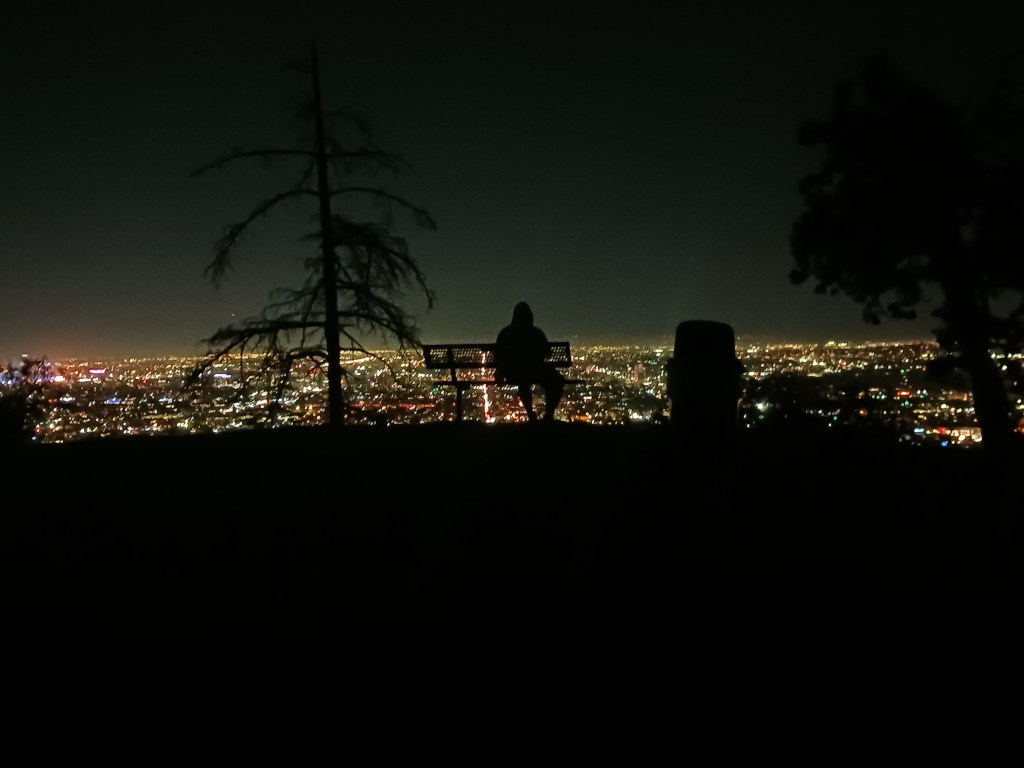
(barely louder than a whisper) what do they do when they can’t find a body?
V.
That a woman might have a right to deny consent to sex with her husband threatens an overall system of patriarchy; that a woman would not want to have sex with her husband challenges his capacity to perform as a man.
(Smith, 2016, p.51)
Sunlight streaked across the indigo mosaic window, metamorphosing into a glint of green as it bathed the board games table Baba, Maa, Ishani had sat at on successive Saturdays. When she fingered the corners, a tattered piece of cobweb laced in carrom chalk shone tantalisingly on her skin – whispered grief, suspended fear. She broke its legs and released the fear; then placed it to the side, with the rest of the dismantled living room furniture.
At some point, Maa’s sister and the sister’s daughter, who worked at an NGO that accrued tangible remnants of people’s past and repurposed them for shelter homes, would arrive, and pick this up. While she waited, she would finish packing.
Ishani surveyed the emotional damage: large piles of furniture had been pushed across the living room to the far wall, stocked one on top of the other, looking like a higgledy-piggledy mess of matter.
How had she ended up scribbling furiously paper to paper, consigning this floor – of the house Maa and Baba had shared with his siblings and their families – to newness? The Mandals were interested: shejo kaku’s reasonable voice. So were a lot of her aunt’s kin group (…just got married, you know, and looking for a ‘readymade’ home – at least it will sort of be in the family). It made sense, thought Ishani: why would she come back?
At two pm, Mashi and mashi’s oldest, Rupa didi showed up, hauling off a multitude of things Ishani had kept aside. She conversed with Rupa didi for an hour: she liked Rupa, about a decade older, and always kind, letting Ishani watch forbidden films when she was a child and being babysat, and when older, encouraging romantic confidences – even on Skype, oceans apart. She was like the sibling she had never had. Minutes into murmured commiserations, Rupa had slipped a thin scrap of paper, across her rough palm into Ishani’s rolled-up one, and nodded slowly – urgently. Ishani had looked down in curiosity: the paper was everything. “It’s the number of Anjali Mohanty,” said Rupa. “Call her. She’ll explain.”
That wasn’t enough for Ishani, so she pressed and prodded, and violently heaved, until Rupa told her more – what she had always known, what others in the family had hinted at (albeit in derisive, scornful whispers). (Can you believe she almost…? Baba’s cousins had gesticulated, at his shraddho service.) Maa had indeed, almost, left it all behind, for the first time – of her own volition. In the last year of her life – even as she struggled, besieged by tumours, and looked after by a distraught twenty-four-year-old Ishani – Maa had made the phone call that Rupa didi was now urging her to make. She had found Saathi (“friend”), NGO “committed to individual choice and dignity for battered women” on the internet – on a smartphone Ishani had got her, and that she had forced herself to learn to use, for this day. She had told Anjali Mohanty’s people, when she’d got them on the helpline, that she wanted options. Life is imminently over, she had told Anjali, co-founder, Saathi, which is why I want to live it. What Anjali had told her on the phone, over many phone calls, and later, in clandestine café corners, Rupa now told Maa’s daughter: there was no legal recourse; there could be no filing, reporting, writing, expecting recognition, expecting Nirbhaya, Nirbhaya-like ethos. Section 375…marital rape exceptions…criminal (in)justices…invisibility…words and phrases Ishani had both resisted and dreamed for two decades, since that first night she’d woken up at two, surfaced in front of her eyes as Rupa articulated them, balling her fists up harder and tighter, until she could smell blood. So, they had talked of moving her out – changing that liminal geography – like Ishani would, when she moved to Baltimore, like Baba had, all of Ishani’s life. Up came those nights Maa had never articulated, because there had never been language, never nirbhaya-like words, in her case. When the cancer had near-engulfed her, she had begged Rupa – and consequently, Anjali – to tell no one, particularly not Ishani. Ishani was going to move, she was going to live a life Maa would happily have, in another life, another time… instead, she would retire to hospice; retire all hopes of another place.
In another life, Ishani dreamed now – as Rupa didi murmured on – Maa could have had the life one of her research participants once told Ishani she had, post- marital rape. For Maa and the research participant were suddenly one. This research participant Ishani had met in a little corner café in a Pune suburb a year ago, had a daughter; she had married a man who raped her, chronically, dismissively, called it sex, or nothing at all, left her curled up in tightly coiled bedsheets while he went to the bathroom to clean himself up as their four-year-old daughter watched in the shadows, shivering something terrible. Once Ishani’s research participant had discovered that figure in the shadows, taken in that terror, she had – left. She was here now, newly divorced, incapable of jailing a rapist others called her husband, but willing to add voice to what she saw as important work: Ishani’s work. In another life, that research participant could have been Maa: as she dreamed, the faces nearly melded into two, the figure in the shadows trembled on her behalf.
When Rupa had finished talking, she pulled out a consent sheet where Maa had clearly signed her name, legitimising all conversation with Saathi: Jamini Das. Das – from 36 years ago, a name she had never used again. Until this moment.
Four thirty pm.
Ishani shook herself out of her reverie. She murmured air, and looked at the two open computer tabs in front of her – dancing like emancipation, like hope: a bright purple “home page” that read Saathi, and a Word document of all her interlocutors, over the years, marked by the years they said it had begun. 1988, she wrote.
References
Menon, N. (2021). “I Didn’t Tell Anyone Because of my Self-Respect”. In M. G. Torres, & K. Yllö, Sexual Violence in Intimacy: Implications for Research and Policy in Global Health (pp. 59-77). New York: Routledge.
Basu, S. (2015). The Trouble with Marriage: Feminists Confront Law and Violence in India. Oakland: University of California Press.
Valle, D. A., & Martin, Z. C. (2021). Entangled with the necropolis: a decolonial feminist analysis of femicide news coverage in Latin America. Feminist Media Studies, 1222-37.
Smith, D. J. (2016). Modern Marriage, Masculinity, and Intimate Partner Violence in Nigeria. In D. J. Smith, Marital Rape: Consent, Marriage, and Social Change in Global Context (pp. 41-54). New York: Oxford University Press.
Urmi Bhattacheryya is a second-year PhD student in Cultural Anthropology at the University of Colorado, Boulder. Prior to this, she was an award-winning journalist in India for a decade, reporting stories of sexual violence against women and children. She is also the author of After I Was Raped – published by Pan Macmillan – that charts the aftermath of long-running rape cases in court, in the lives of five survivors in India. The book was longlisted at Tata Literature Live, and shortlisted for Best Debut, Times of India AutHer Awards. Currently, Urmi researches – through ethnography and participant interviews – the phenomenon of marital rape and the articulations of consent across India: a country that does not criminalise marital rape. Find her on twitter @Urmi_1990.
ethnographic fiction Methodology Reflections anthropology ethnography fiction India writing


