
Fielding the Familiar: Reflections on Researching the Hometown
July 1 2024
Deepti Sreeram
It was in a seminar, where the panelists were praising a job talk candidate for choosing a risky field site, that I felt a pang of uneasiness. In the first year of my PhD coursework, I had realised that my research question and my field site were not particularly exciting for the discipline of Anthropology. Since my research project examined what quality is in relation to higher education in India, which as Hugh Gusterson (2017) notes, is not work typically valued by anthropologists, I had accepted that my project might not garner attention within the discipline. Moreover, since my work involved doing research in my hometown, Calicut in Kerala, my project was marked with the baggage of proximity. My familiarity with the setting made the project less intriguing to the discipline; where it was neither distant enough to elicit curiosity nor risky enough to invite scrutiny.
In anthropology, the concepts of familiarity and strangeness are closely intertwined. Every student who studies anthropology knows the importance of making the familiar strange and the strange familiar before heading out for fieldwork. In spite of this emphasis on both the strange and the familiar, students are often encouraged to explore the distant over the familiar. Although there is merit to this advice, in this essay I argue that the focus on the distant emerges from a discomfort with engaging deeply with the familiar.
Debates on familiarity in anthropology often revolve around the problem of being too close to the field site or on the benefits of reflexivity. For instance, Geer (1964) has explained how familiarity could become a problem for untrained observers when they visit field sites they know too well. Other scholars have argued how familiarity could make ethnography more reflexive, making it an ethical advantage for the ethnographer. While both arguments are relevant, they both hinge on a homogenous understanding of familiarity. Instead of looking at familiarity through these lenses, in this essay, I attend to a comment that Marilyn Strathern (1987) makes in relation to familiarity. In her discussion on the limits of auto-anthropology, Strathern discusses the importance of rescuing the concept of home from “impossible measurements of degrees of familiarity” (16). Since the feeling of being at Home is never fully realised by the ethnographer or the investigated, Strathern argues that familiarity does not lead to greater reflexivity. Although this is a compelling argument, in this reflective essay, I am drawn towards exploring a different mode of thinking in relation to what she calls “degrees of familiarity”. What “degrees of familiarity” can expand or limit fieldwork for an ethnographer based in the Global South? Or to put it more simply, who can afford to be familiar or distant?
Because a thorough literature review on the concept of familiarity is beyond the scope of this essay, I describe familiarity (in the context of this essay) as an embodied understanding of a place or people. While this description is fraught, I am using it to discuss a form of knowing that is available to us, before fieldwork.
First Impressions: Dipping Toes in Familiar Waters
It was only at the end of my first year of PhD, when I was conducting my pilot study, that I had begun to understand the complexity of researching the familiar. Although reconnecting with school friends followed by conversations with extended and immediate family in my hometown had set a few elements of the fieldwork in motion, this phase of getting in touch with people I knew was punctuated with a strange sense of unease. In an earlier life, I had distanced myself from such networks to protect my privacy and mobility. To get back to the same networks then was unnerving and challenging. However, despite these initial misgivings, old school friends were rising to the requests for contacts. Others were making offers to meet, to ensure that I was not entirely alone in this city.

This slow progress came to a halt when I was compelled to consider my ancestral home for temporary accommodation in Calicut. Now occupied by my uncle and aunt, the home was the only property that my mother owned along with her other siblings. While this access to a home should have ideally ensured a smooth stay for conducting my pilot fieldwork, it opened up old conflicts within my family. My uncle and aunt for instance believed that my stay at the house was an attempt at establishing ownership. My mother, on the other hand, was worried that I would spill information (family secrets) to my relatives.
In her account of doing Anthropology at Home, Altorki (1994) argues how the status of being an insider compromised her identity as a researcher. Since her fieldwork involved conversations with her own family members, most of them had identified her as a threat who would reveal information privy to the family, to the outside world. In my field site, a different sentiment was at play. My presence in the house was a threat long before my arrival. It had reopened an old family wound around the ownership of the house which intersected with the failure of caste mobility. Because my mother and her younger brother were the only college-educated members in the family, my uncle’s family were dependent on them for financial support. While these gestures may be generous, it was evident that the long-term financial dependence had created a network of difficult relationships within the family. It was amidst these concerns that I had arrived, bags in hand, to undertake an ethnographic project.
My awareness of home and the underlying anxieties within family had not been so visible when I was doing my studies elsewhere. With my re-entry into my hometown, the troubles back home had now become difficult knowledge that I was carrying into my field. Knowing so much about home was now leaking into my fieldwork to the extent that I was dreading my days spent on the field. Finally, when things at home came to a head, I quit my pilot study.

‘Pulling Teeth to get them to see’1
Although anthropological scholarship has extensively explored doing ‘Anthropology at Home,’ these conversations have often foregrounded the processes of knowledge making and the research method over the personal consequences of navigating familiarity. Recent attempts at developing a methodological framework that attends to the researchers’ ties, locations and identities (Günel and Watanabe, 2024) show that the ethnographer is never fully disconnected from familial connections even when one projects the image of a lone ethnographer. Despite these interventions, the expectation that the anthropologist must exercise distance and conduct objective research continues. But how does one achieve this distance?
For white research scholars hailing from universities based in the US, access to funding opportunities and their white identities support the possibility of doing fieldwork in distant places. Even though geographical distance from the fieldsite may include a poor knowledge of the field language, white scholars are allowed to consider distant projects if they produce scholarship that pass the tests of rigour. A similar privilege is also available to upper-caste Indian research scholars trained in the West. Though these scholars may not be encouraged to conduct research beyond their home country (many Indian scholars have been told to explore their own countries) , their access to funding along with their homegrown upper-caste networks in India have helped them set their projects in distant and risky sites within India.
While none of these approaches are harmful to research, it is interesting to consider what an absence of such privileges for non-elite lower caste scholars may look like. For example, in the first year of my doctoral project in India, I was interested in setting my study across universities in Delhi and Kerala. However, the thought of finding accommodation in an expensive city like Delhi kept me from considering the prospect even though it may have provided a richer understanding of higher education in India. Most of us who are pursuing graduate studies in India are compelled to explain such fieldsite choices as methodological decisions even though they are determined by financial resources. In seminar after seminar, I have justified Calicut’s potential while concealing the fact that I wanted to conduct research and manage home responsibilities in an inexpensive site. Even when I had confessed to some academics about the financial difficulty of doing fieldwork in Delhi, I was told that only a multi-sited field project would align with my research question. These reactions show how the discipline is not ready to fully accept familiarity or the ways in which it becomes the only choice for some of us who are financially pressed.
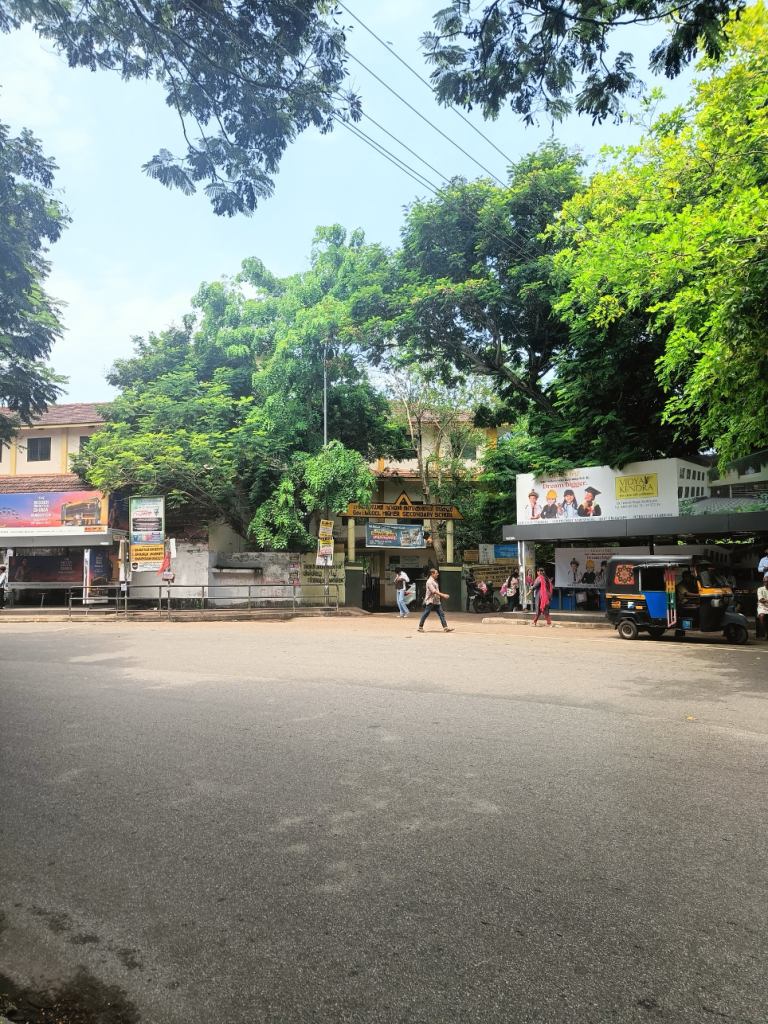
While being a native of Kerala has helped me explore the city of Calicut with abandon, I have also been acutely aware of the suspicion that my presence generates within universities and colleges in Kerala. For example, in the college I frequent, my presence as a Malayali who understands the undercurrents, the gossip and the innuendoes have made interlocutors deeply wary of my presence. Moreover, since the state of Kerala has had a communist history of resisting privatisation, there is widespread distrust towards people who study or work in private universities in India. That people from private universities are looking to demean those who work in public institutions was often recounted to me in conversations when I explained that I was a graduate student from a private university in Delhi. Such experiences reveal how certain degrees of familiarity can be difficult to navigate particularly when one does not have the distinct advantage of a superior identity or location.
Given that first generation scholars from lower-caste locations in India struggle with breaking into elite networks for their fieldwork, how can we continue to expect a monolithic understanding of how scholars navigate familiarity? In light of this hierarchy where distance from privilege becomes a hindrance to research, how might we make sense of the continued calls for rigorous and objective research within anthropology?
Most ethnographies written by white anthropologists on the other hand describe the warm welcome and attention they received in their field. Although these accounts are not unanimously generous narrations of field experiences, they often reveal the privileges white scholars receive during fieldwork. Some white scholars for example have recounted how their interlocutors had invited them home and let them stay free of cost. Others have recounted how their presence in the field was identified as a positive for the fieldsite. For instance, in his account of a school in Kochi, David Sancho (2015) recalls how the school mobilised his presence as a value addition for the school’s international identity. In contrast, despite my familiarity with Calicut and Kerala as a Malayali, I struggled with getting access to an educational institution in Calicut. This problem with access and reception was further compounded by the fact that I had no structural access to connections that would ensure both. Given that first generation scholars from lower-caste locations in India struggle with breaking into elite networks for their fieldwork, how can we continue to expect a monolithic understanding of how scholars navigate familiarity? In light of this hierarchy where distance from privilege becomes a hindrance to research, how might we make sense of the continued calls for rigorous and objective research within anthropology?
Doing ‘Homework’ in Academic Settings
In his presidential address to American Ethnological Society (2017), Gusterson argues how anthropologists have not done enough ‘homework’ within their own educational settings. Even though higher education institutions have undergone drastic transformations affecting the everyday lives of academics including anthropologists, there has been hesitation towards studying inwards. To Gusterson (2017), this hesitation signifies the avoidance relationship that anthropologists share with their institutional settings. Even though anthropology prides itself on being self-reflexive and have critiqued its colonial past of wanting to explore the distant, anthropologists have hesitated from studying their own.
I have frequently wondered if the choice of studying higher education would cost me opportunities. Choosing to research the familiar (i.e. the educational setting) is neither brave nor important to anthropology that is concerned with ‘global catastrophic realities’. In India, for example, well-known departments of sociology and anthropology have rarely considered the prospect of studying their own academic settings. Even though there is an emerging ethnographic scholarship on higher educational institutions in India (Ruddock, 2021; Subramanian, 2019), there aren’t many anthropologists based in India who are interested in pursuing this line of research.
As an ethnographer who had to return to their hometown and explore the institutional everyday life of a university, I was quite worried about this gap. What kind of precedent is available to an Indian researcher looking to the university as a field? How does one navigate relationships within academic settings when our interlocutors are extremely self-aware of the extractive nature of our research? While familiar routines and practices of the institution made the setting of a university accessible, this familiarity did not make actual conversations. At several junctures, I had to repurpose my study and avoid terms that would invite immediate suspicion. For example, since my study involved an exploration of quality in education, I was frequently omitting the word quality and explaining how my study was trying to understand what good education is. At these junctures, I wondered if the choice of researching distant Others or locations made such conversations easier.
In her ethnographic study of academic anthropology in India, Bandeh-Ahmadi (2018) shows how intellectual kinship within academia locates, protects and felicitates academic participation. In what could be described as an incisive critique of the sociology departments in Delhi, Bandeh-Ahmadi explains how intellectual kinship towards mentor-like figures within departments have often concealed the ways in which the department favoured their own. While this sentiment is also prevalent within US and UK academia, what becomes clear is how such forms of familiarity are celebrated and folded into the history of the institution. This suggests how the discipline and by extension departments have been more accepting of some forms of familiarity while rejecting others.
Despite making a fair argument on intellectual kinships, I realised much later that several academics based in Delhi were upset with Ahmadi’s work. Since institutional ethnographies can be read by the academic interlocutors, such studies could easily raise uncomfortable feelings around accessibility that some forms of privilege offer. It could also block employment opportunities and make the researcher’s position tenuous. Although researching familiar settings such as the university or college may seem less risky, I would argue that there is a significant amount of stress involved in engaging with institutional settings. Apart from engaging with the real possibility of burning academic ties that may bring job opportunities, it can also actually invite complaints of ethical misconduct and instant critiques since the work can be easily read by the very same interlocutors.
Finding familiarity in Others
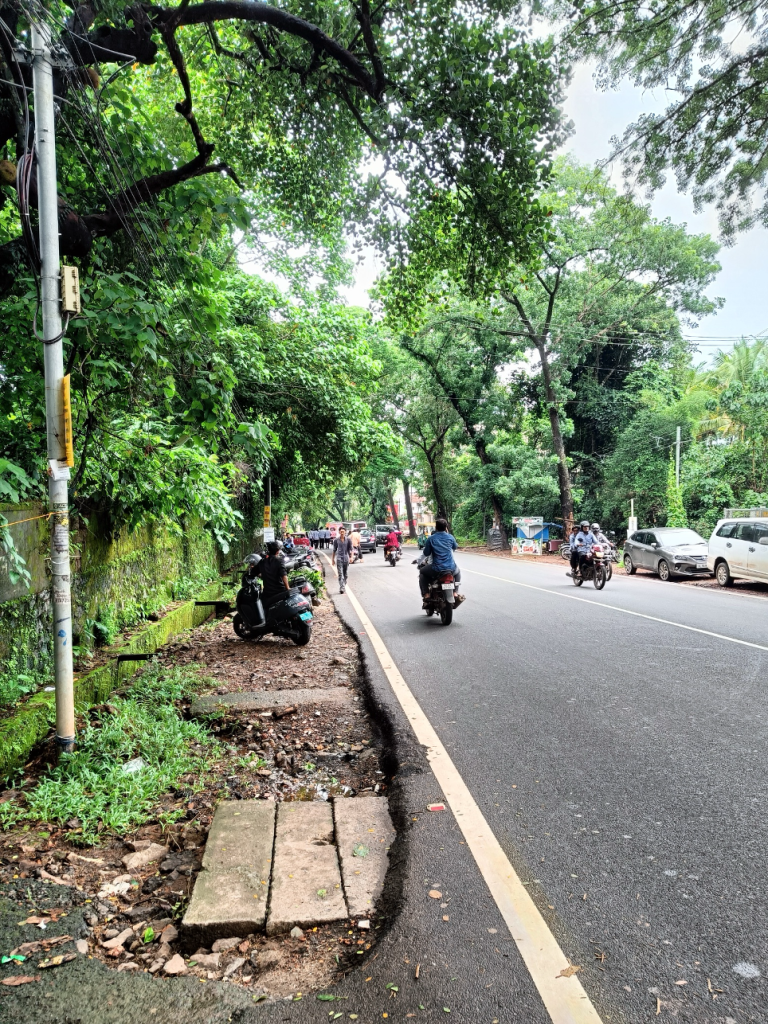
A week into my PhD programme, I was sitting through a talk when the speaker began sharing insights from their interactions with fishing communities. Although I tried to stay stoic through the conversation, I could sense a noticeable discomfort within me when I watched an upper-caste academic share their reflections on my community. At that moment, I desperately wished that I could become that ethnographer who was born elsewhere and had the relief of disappearing into the unknown.
While writing this article, there were several moments where I chastised myself for describing too much. Everyone who ventures into the field has had difficult if not traumatising experiences. Difficulty with access or being around problematic interlocutors are not unique to me or to anyone who has to study what is familiar. Despite these warnings in my head, I felt it was necessary to think more openly and honestly with familiarity. When ethnographies repeatedly exhort the love and the warmth for fieldwork without emphasising the many moments of discomfort and loneliness, how can we continue to make them materials for method? Without falling prey to the narcissistic urge of glorifying the self, how can we pay attention to the ways in which we navigate distance? What forms of closeness allowed us better access? What forms of distance expanded the limits of fieldwork?
Without falling prey to the narcissistic urge of glorifying the self, how can we pay attention to the ways in which we navigate distance? What forms of closeness allowed us better access? What forms of distance expanded the limits of fieldwork?
In the six months since I arrived at my hometown, I have moved in and out of my field, constantly looking for a method that would anchor my position as the ethnographer. Although two years of coursework and a short pilot study had prepared me towards imagining the ethnographer that I should be, it had not necessarily led to an aha moment. In his book, Arjun Shankar (2023) recalls how his socialising with others was marked by feelings of isolation and nervousness that came with sharing himself with others. While his method is pivoted towards being more open towards his interlocutors, I see value in bringing the same towards how we write our field accounts. Instead of focusing only upon the perils of familiarity or on the advantages of being familiar in knowledge production, how can we share the ways in which we navigated familiarity and distance in more radically open ways? How can we perhaps admit to the ways in which we took available and accessible routes for information? In what ways can we reimagine familiarity and distance particularly with scholars who study with the very little they have?
Many of the reflections that I shared in this essay have already been in circulation within anthropological scholarship. These arguments however fall into the void every year as we prepare the next set of graduate students for fieldwork. The consistent organisation of academic conferences on South Asia in countries which have stringent visa regulations, the provision of excess grants for scholars in more privileged countries while offering none to those in need, the discomfort with acknowledging the access some of us have over others in conducting our fieldwork and the continued celebration of the distant and the risky, indicate how we may need a more conscious understanding of the familiar and the strange. With more and more white scholars finding jobs in the Global South, particularly in elite universities, the academic market in India has also become more in favour of those who have a certain geographical advantage. Decolonising anthropology or even de-Brahminising anthropology may only be possible if we are willing to practise radical honesty and generosity in what we imagine as objective and rigorous research.
NOTES
[1] Becker (1971) uses this phrase to explain how hard it is to make untrained observers in college classrooms see when the fieldsite is too familiar. In this context, I use the phrase to highlight how academics in anthropology fail to see their distance/closeness to fieldsite as settings marked by privilege.
References
Altorki, Soraya. “At Home in the Field.” Etnofoor 1 (1994): 53-71.
Bandeh-Ahmadi, Nurolhoda. “Anthropological Generations: A Post-Independence Ethnography of Academic Anthropology and Sociology in India.” PhD diss., 2018.
Geer, Blanche. “First Days in the Field.” In Sociologists at Work, edited by Philip E. Hammond, 322-344. New York: Basic Books, 1964.
Günel, Gökçe, and Chika Watanabe. “Patchwork ethnography.” American Ethnologist 51, no. 1 (2024): 131-139.
Gusterson, Hugh. “Homework: Toward a Critical Ethnography of the University: AES Presidential Address, 2017.” American Ethnologist 44, no. 3 (2017): 435-450.
Ruddock, Anna. Special Treatment: Student Doctors at the All India Institute of Medical Sciences. Stanford University Press, 2021.
Sancho, David. Youth, Class and Education in Urban India: The Year That Can Break or Make You. Routledge, 2015.
Shankar, Arjun. Brown Saviors and Their Others: Race, Caste, Labor, and the Global Politics of Help in India. Duke University Press, 2023.
Strathern, Marilyn. “The Limits of Auto-Anthropology.” In Anthropology at Home, edited by Anthony Jackson, 16-37. London: Tavistock Publications, 1987.
Subramanian, Ajantha. The caste of merit: Engineering education in India. Harvard University Press, 2019.
Deepti Sreeram is a third-year doctoral student of Anthropology at Ashoka University, Sonepat, India. Her work examines the question of quality in relation to higher education. She is currently in Calicut, Kerala.
She tweets at: @anthronotes21
Methodology academia anthropology ethnography India reflexivity writing

 Ethnographic Marginalia